Day 326 of Year 9 Low-SOS Vegan Plan

EXERCISE:
* Powerwalk indoors 60 minutes
* Lift chest & back

WATER:
(2) × (32) = 64 oz (+)

EATS:
* oatmeal w/ blueberries, cinnamon, splash of almond milk, banana
* oilfree Mongolian grilled veggies served over whole wheat pasta (no egg)
* sliced orange
* more Mongolian bbq

… SUN HAS SET …

Cmmt: XL indicates uncommon extravagantly luscious food, and wautéed means water-sautéed

Day 325 of Year 9 Low-SOS Vegan Plan

Mushroom-Oats burger patties

EXERCISE:
* Rest (On rest days I normally do some housework, shopping, etc. But today it’s windy & rainy outside, so this is REALLY a rest day. Besides preparing meals I’m taking a glorious Sabbath day off!)

WATER:
(2) × (32) = 64 oz (+)

EATS:
* oatmeal w/ blueberries, cinnamon, splash of almond milk, banana
* a few oilfree garlic & vinegar marinated mushrooms
* gorilla salad (I was inspired by the salad bar post. There are too many great veggies in my salad to name!)
* I crumbled the mushroom-oats patties for salad garnish
* dressing was low XL-oil, dairyfree spicy hot wings sauce diluted w/ ac vinegar
* another banana

… SUN HAS SET …

Cmmt: XL indicates uncommon extravagantly luscious food, and wautéed means water-sautéed

Vegan Melty Cheese Recipe – American Style No Oil or Nuts – Healthy Slow Cooking

Vegan Melty Cheese Recipe – American Style No Oil or Nuts

This is so easy to make, and you have Julie Hasson to thank for this genius recipe. She told me her process and then I created a few oil-free variations. You will need to invest in a few specialty ingredients, but you can order them from Amazon. They last for dozens of batches of oil-free vegan cheese!

Prep Time5minutes mins

Cook Time10minutes mins

30minutes mins

Course: Appetizer, Cheese, staple

Cuisine: American

Keyword: gluten free matzo ball, no added oil, nut free, vegan cheese

Servings: 12 servings

Calories: 47kcal

Author: Kathy Hester

Equipment

  • whisk
  • Kappa Carrageenan
  • Tapioca Starch
  • Vegan Lactic Acid

Ingredients

  • 2 cups water
  • 1 (14.5 oz) can chickpeas or about 1 1/2 cups cooked
  • 3 tablespoons tapioca starch
  • 2 tablespoons kappa carrageenan
  • 2 tablespoons nutritional yeast
  • 2 teaspoons salt or use salt substitute to keep salt-free
  • 1.5 teaspoons lactic acid or 3/4 tablespoon apple cider vinegar
  • 1 teaspoon onion powder
  • 1 teaspoon garlic powder
  • 1/2 teaspoon smoked paprika
  • 1/4 teaspoon ground turmeric
  • 1/16 teaspoon mustard powder add more to make sharper

Instructions

  • Blend all the ingredients together in your blender until very smooth.
  • Pour the mixture into a large saucepan, and bring to a simmer over medium heat, whisking continually.
  • Continue cooking, whisking continuously, for about 7 to 9 minutes until the mixture has thickened nicely and is very glossy.
  • Pour the cheese into a smallish container that can contain a minimum of 2 cups volume. I like to use small loaf pans or glass bowls.
  • If properly cooked, the cheese will start to set right away.
  • Allow the cheese to set at room temperature for 30 minutes.
  • Then cover and refrigerate the cheese to finish setting for 3 to 4 hours.
  • If the cheese doesn’t set up properly, that means you haven’t cooked it long enough, if this happens to you, throw it back into the saucepan and cook for a few minutes more!
  • It’ll re-melt, and then you can pour it back into the mold for it to solidify.
  • Remove the cheese from the mold and serve. Store leftovers in the fridge.

Notes

This cheese slices and melts. With the bean cheese it will not stretch much, so it doesn’t look like melty dairy cheese.

You can also freeze then shred. Or freeze for storage.

Nutrition

Calories: 47kcal | Carbohydrates: 8g | Protein: 3g | Fat: 1g | Saturated Fat: 0.1g | Polyunsaturated Fat: 0.2g | Monounsaturated Fat: 0.1g | Sodium: 391mg | Potassium: 93mg | Fiber: 2g | Sugar: 1g | Vitamin A: 47IU | Vitamin C: 0.3mg | Calcium: 13mg | Iron: 1mg

https://healthyslowcooking.com/wprm_print/47610

Do you have abdominal pressure syndrome? (Peter Rogers)

Abdominal pressure syndrome = lack of dietary fiber leading to chronic constipation;  leading to straining at defecation with Valsalva maneuver;  leading to chronic increased abdominal pressure;  leading to hemorrhoids, diverticulosis, diverticlulitis, varicose veins, hernias, varicocele, hiatal hernia, GERD, esophageal cancer.  Dry stool also associated with appendicitis.  Slow stool transit time, high fat diet, lack of fiber are associated with increased risk of colon cancer, and lack of fiber with increased risk of leaky gut.  Leaky gut is associated with autoimmune disease.

The 5-day diet reduced ‘biological age’ by 2.5 years

A Cardiologist’s Go-To Dinner:

What’s for dinner in Dr. Hermann’s home? Often, this cardiologist makes a fresh salad topped with grilled salmon. We know we mentioned letting the heart choose dinner over the tastebuds. However, good news for people who want it both ways: “I love the freshness and lightness of the meal,” Dr. Hermann says. “It’s delicious.”

Beyond that, the light, fresh meal is nutrient-dense. “Fresh, leafy, green vegetables are loaded with vitamins, nutrients and antioxidants,” Dr. Hermann explains. “Salmon is also loaded with vitamins and contains omega-3 fatty acids that are known to improve lipid profiles and reduce arterial inflammation, which contributes to atherosclerosis.”

Leafy green vegetables boast fiber, vitamin C, zinc and vitamin A, all of which can lower heart disease risks. Darker leafy greens like spinach, broccoli and romaine lettuce are more nutrient-dense than iceberg lettuce, according to Cleveland Clinic. One 2021 study linked leafy-green veggie consumption with lower cardiovascular disease incidences.

The American Heart Association (AHA) recommends eating two servings of fish weekly (six ounces cooked) to lower your heart disease and stroke odds, and the AHA specifically emphasizes the benefits of fatty fish, like salmon.

To keep this salad heart-healthy, Dr. Hermann suggests avoiding one common pitfall.

You should be very careful about salad dressings,” he says. “They can be very high in calories and be a source of processed foods [due to oil or creamy dairy ingredients]. Ultra-processed foods are a huge and, frankly, dangerous source of calories in the average American diet. Intake of processed foods is linked to cardiovascular disease, and it is one of the current leading causes of dementia.”

A 2022-published study showed that higher consumption of ultra-processed foods was associated with elevated chances of heart disease and death. Another study published online the same year linked ultra-processed food intake with cognitive decline.

Other Ways to Make Heart-Healthy Dinners Easy:


When you’re busy or stressed out, it’s easy to reach for the first thing in your kitchen or pantry. Dr. Hermann has a quick tip to help you ensure that “thing” is one your heart will love.

“Place healthy food choices in front of your eyes in your pantry and fridge,” he recommends. “We often pick to eat one of the first two or three choices that we see. Don’t hide the good, healthy stuff in those opaque fridge drawers.”

Salmon may not be your salad topper—and that’s OK. However, you’ll want to choose alternatives wisely. “Make sure you substitute processed red meats for fresh fish and legumes and avoid ultra-processed foods,” Dr. Hermann shares. “This is really challenging because we are inundated with these foods, and they are typically relatively easy to prepare.”

Dr. Hermann says that high-sodium add-ons like tortilla chips can also lower the heart-healthy benefits of a salad, as can sipping soda or other sugary beverages with your meal.

Finally, you can’t control every factor associated with heart disease risk, such as genetics and age. However, you can control other aspects, like exercise and food choices, for the most part. Dr. Hermann stresses it’s important to use this truth to step into your power when you open the fridge rather than send you down a shame spiral.
Your choices matter, which is super empowering,” he says. “Even small healthy changes can yield big results.”

“What we put in our mouths daily has a tremendous impact on our health,” says Dr. Daniel Hermann, MD, an interventional cardiologist with Memorial Hermann in Houston. “In fact, the number one leading modifiable risk factor for death in the U.S. is poor dietary choices…It’s really important to make good food choices to stay healthy, feel better and live longer.”

Indeed, a 36-year cohort study of more than 85,000 people published in 2022 found that people who maintained a body mass index in the normal range, never smoked, consumed a healthy diet, and followed public health advice on alcohol and physical activity lived longer.

https://www.aol.com/im-cardiologist-heres-eat-dinner-172500926.html

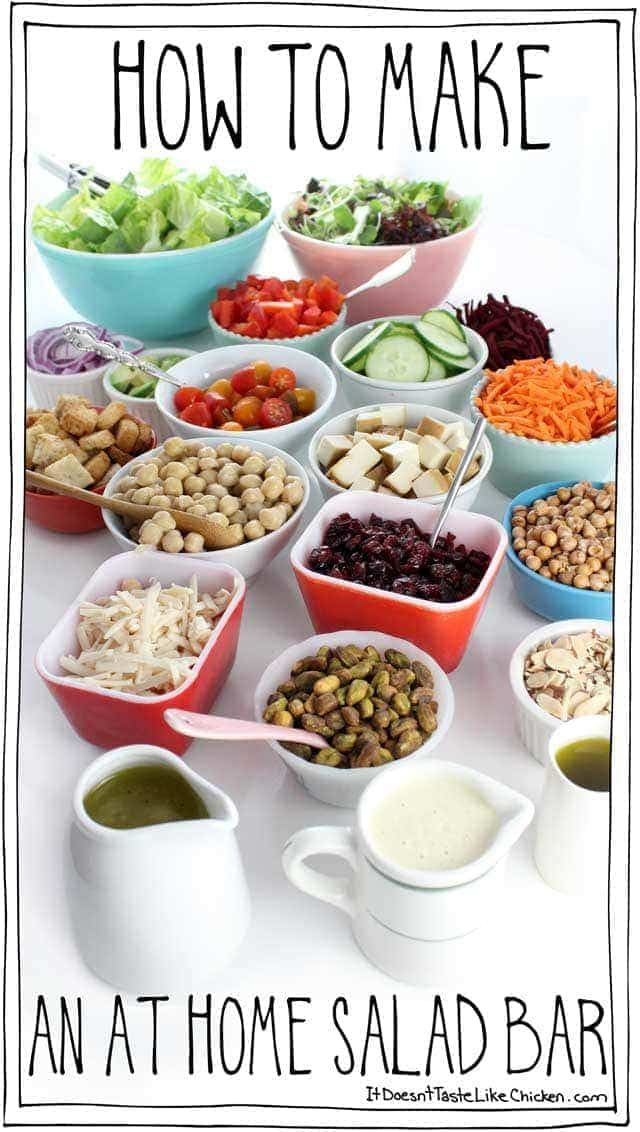
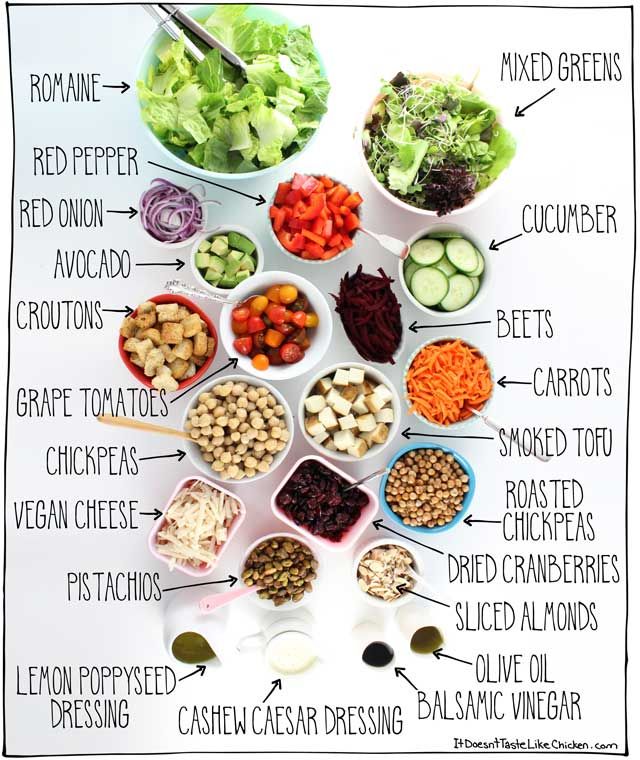
Home Salad Bar


Ingredients


Lettuce:
romaine
baby spinach
arugula
lettuce mix
kale


Fresh veggies:
sliced bell peppers
grated carrots
corn kernels
cucumber slices
red onion slices
sprouts
sugar snap peas
tomato slices or halved grape tomatoes
mushroom sliced
avocado sliced
grated beets


Beans and tofu:
chickpeas (roasted or plain)
kidney beans
black beans
lentils
edamame
smoked or other seasoned tofu cubes


Nuts and seeds:

(Use judiciously, these are high fat, yet also excellent fiber sources)

almond slices
pepitas (shelled pumpkin seeds)
pistachios
pecans
walnuts
sunflower seeds
sesame seeds


Fruit:
dried cranberries
raisins
apple slices
pear slices
strawberry slices
berries


Other toppings:
sun-dried tomatoes
marinated mushrooms
croutons
marinated artichoke hearts
coconut bacon or vegan bacon bits
olives
roasted red peppers
grated vegan cheese


Dressings:
Click here for lots of low or fatfree dressings.


Instructions
Prepare your salad dressings (they can be made ahead of time if you like).


Arrange all of your selections on the table in individual bowls, starting with the lettuce on one side and working your way through the options with the dressings last so that salads can be assembled in order.

Enjoy!


Find it online:

https://itdoesnttastelikechicken.com/how-to-make-an-at-home-salad-bar/