• Academic Title: Dr. iur. (Doctor of Laws from the University of Göttingen). He also holds an LL.M. from UCLA. • Professional Title: He was traditionally a Rechtsanwalt (German attorney) and was admitted as an international attorney with the State Bar of California, though his status is no longer eligible to practice law.
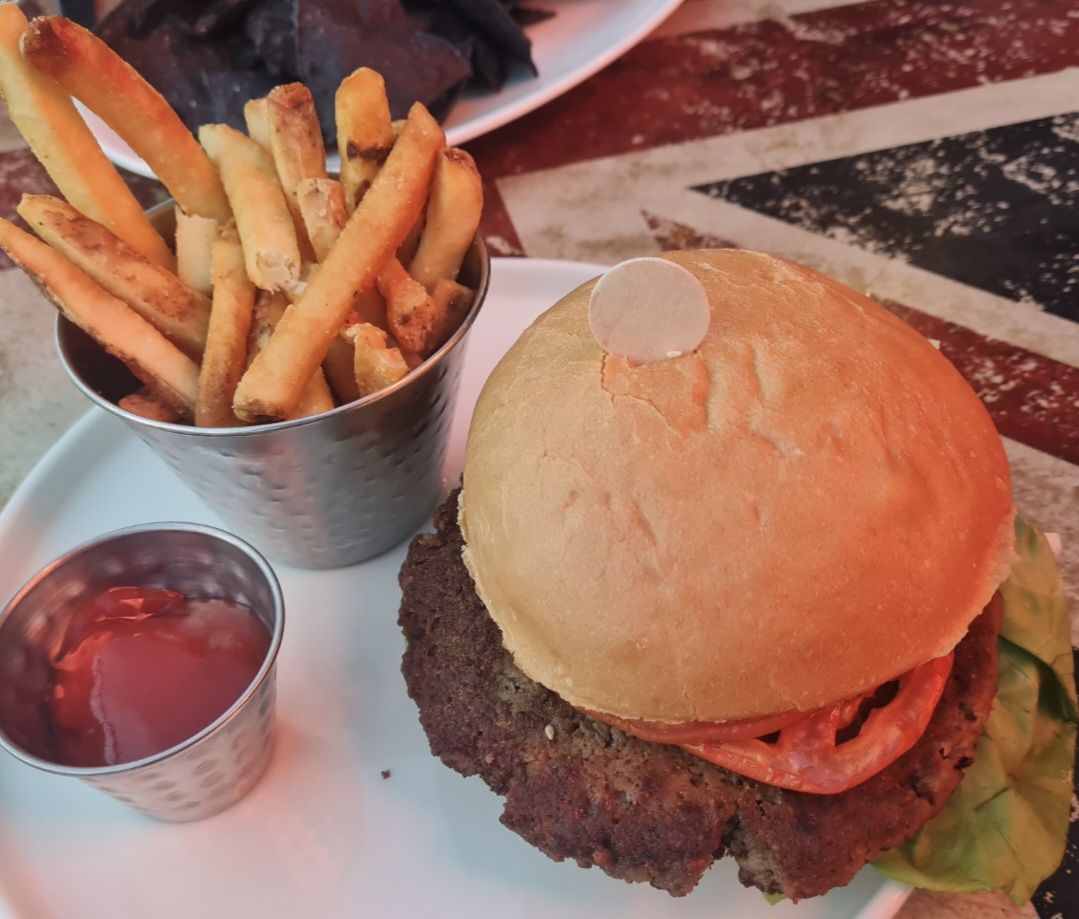
For the vegan burger patties 400g chickpeas in water, drained 2 sweet potatoes 250g plain flour 1 tsp whole cumin seeds 1 tsp paprika powder 1/2 tsp black peppercorns Small bunch of coriander Vegetable oil, for frying (or just airfry)
For the beetroot hummus 2 large purple beetroots 1 tbsp red wine vinegar 200g chickpeas 1 clove of garlic 1 tsp cumin powder 1/2 tsp paprika powder 1 tbsp tahini paste Pinch of salt Juice of 1 lemon
For the tomato salsa 6 plum tomatoes 1/2 red chilli 1/2 clove of garlic 1/2 red onion
To garnish Vegan burger buns Baby gem lettuce leaves, 2 per burger
Cooking instructions
For the beetroot hummus *Cook the beetroot in water with red wine vinegar and a pinch of salt – make sure that the water completely covers the beetroots. *Bring to a boil, cover, and turn down the heat to simmer for around 30 minutes. *When the beetroots are soft and can easily be speared with a knife, remove them from the water and blitz in a food processor to make a smooth puree. *Blitz the drained chickpeas in a food processor, add 1 tsp of cumin powder, 1 crushed clove of garlic, ½ tsp of paprika powder, 1 tbsp of tahini paste, the juice of one lemon and a pinch of salt. *Mix all ingredients together until smooth. *Mix the beetroot puree into the hummus. *Half of this mixture will be added to the burger patty mix, and half will be kept aside for garnishing.
For the vegan burgers *Cook the sweet potatoes in the oven at 200 degrees celsius for around 20 minutes until they are soft in the middle. *Cut into halves and scoop out the insides. *Blitz 400g of drained chickpeas, add the cooked sweet potato, half of the beetroot hummus, coriander, whole cumin seeds, paprika, and salt and pepper to taste. *Mix until smooth. *Transfer to a mixing bowl and add 250g of plain white flour and mix it well. *Shape 3tbsp of the mixture into a round patty shape, continue with the rest of the mixture. *Add 1 tsp of vegetable oil to a frying pan and cook each patty on a medium to high heat. [Better to simply airfry w/ no oil at this point] *Cook each side for 1 minute until browned, and then transfer the patty to the oven and cook it for a further 10 minutes at 200 degrees celcius.
For the tomato salsa *Dice the plum tomatoes. *Add ½ a diced red chilli *1 chopped clove of garlic *half a diced red onion
Constructing the burger *Spread beetroot hummus over both sides of the vegan bun. *Add 1-2 baby gem lettuce leaves, depending on their size, and some sliced red onion. *Lay a baked vegan patty on top and then spoon over tomato salsa. *Add the top half of then bun, and enjoy!
Recipe (1 loaf for 9 X 5 inch pan, NOT 9 X 13 inch pan as stated in the video)
INGREDIENTS * 500g sprouted whole grain flour – that’s approx 3 cups and 2 Tbs (video used spelt, but whole wheat works well too! If you don’t have sprouted grain flour, you can use any whole grain flour.) * 2 tsp himalayan pink salt * 2 Tbs unfed starter from fridge * 1 ¾ cups room temperature water * ¼ cup each of sunflower seeds, pumpkin seeds, black sesame seeds, hemp seeds, and ground flaxseed
INSTRUCTIONS
Mix: Whisk flour, salt, and seeds in a large bowl. Stir in the water and unfed starter until a shaggy, wet dough forms and no dry patches remain.
First Rise: Cover the bowl tightly. Let it sit on the counter at room temperature for 12 to 18 hours (overnight) to ferment.
Shape & Second Rise: Transfer the dough into a greased 9 X 5 inch loaf pan. Cover and let rise for 2 to 4 hours until puffy.
Bake: Bake at 400 deg F for 1 hour (first 40 minutes with cover on, last 20 minutes with cover off). Cool completely before slicing.
• 1 cup zucchini or yellow summer squash (peeled and chopped) • 1 tbsp pure, raw sesame tahini • 3 tbsp fresh lemon juice (for that distinct tang) • 1 tbsp apple cider vinegar (adds a sharp, layered punchiness) • 1 clove fresh garlic (or \(\frac{1}{2}\) tsp garlic powder) • 2-3 tbsp ICE water (adjust amount for desired pourability) • Optional: 1 tbsp nutritional yeast for a savory, salt-free umami kick.
Instructions
1. Steam the squash: Steam the peeled zucchini chunks for about 5–7 minutes until tender. Let them cool slightly. 2. Blend: Toss the steamed squash, tahini, lemon juice, apple cider vinegar, garlic, and optional nutritional yeast into a high-speed blender. 3. Thin it out: Add water 1 tablespoon at a time and blend until completely smooth and velvety.
Nutrition Info Serving Size: 2 Tbsp (30g)
• Calories: 13 • Total Fat: 0.8g • Saturated Fat: 0.1g • Trans Fat: 0g • Cholesterol: 0mg • Sodium: 2mg (This is entirely natural sodium from zucchini and garlic; no added salt) • Total Carbohydrate: 1.2g • Dietary Fiber: 0.3g • Total Sugars: 0.3g (Includes 0g Added Sugars) • Protein: 0.4g • Vitamin D: 0mcg (0% DV) • Calcium: 12mg (1% DV) • Iron: 0.2mg (1% DV) • Potassium: 54mg (2% DV)