[vegan bacon recipe] 1 tsp salt or to taste Pepper to taste
Instructions:
Boil the potatoes until just tender. Cool completely, dice them and set them aside.
In a bowl, whisk together the mayo, coconut aminos, mustard, apple cider vinegar, celery seeds, and smoked paprika.
Add the diced celery, onion, fresh dill, and optional salt and pepper and mix. Add the diced potatoes and mix again until your potatoes are coated and all the ingredients are well combined.
Dr. Peter Rogers answered dozens of your questions on everything from cholesterol and B12 to microplastics, IBS, LDL targets, osteoporosis, fasting, and more.
00:03 — Intro / stream setup 01:05 — Q1: Mild CLL at age 76 — flu & COVID vaccines? Beans/tofu needed on plant-based? 03:08 — Q2: Wheat germ? Any benefit or issues? 03:34 — Q3: Need the flu vaccine if you’re vegan? 04:28 — Q4: Heart palpitations — when to worry? Sodium levels? 06:59 — Q5: Minimalist diet approach — what does Peter recommend? 07:30 — Q6: Weight loss plateau — is low fat enough? 08:57 — Q7: Hair loss — do fish or omega-3s help? 10:42 — Q8: Tight hats & hair loss (Peter’s story) 11:29 — Q9: Best non-antibiotic treatment for SIBO? 13:21 — Q10: Recurrent miscarriage, infertility, hormones, organic food? 15:52 — Q11: Should you get the pneumonia vaccine at a plant-based age? 17:50 — Q12: LDL goals for atherosclerosis — how low is safe? 19:16 — Q13: IBS not improving on plant-based — next steps? 21:06 — Q14: B-12 testing — methylcobalamin vs cyanocobalamin? 23:03 — Q15: Perfect diet but cholesterol still high — why? 25:49 — Q16: Probiotics — helpful or hype? 27:47 — Q17: Very high LDL — what would Peter do? 29:02 — Q18: Water-only fasting medically supervised — advice? 30:00 — Q19: Finnish/Nordic sauna temps — safe or dangerous? 31:29 — Q20: Cooked mushrooms & breast cancer survivor — safe? 32:31 — Q21: Microplastics — practical ways to avoid them 35:00 — Q22: Plastic plates, clothing fibers, water filters 35:58 — Q23: HRT — breast cancer risk? Uterine cancer risk? 39:21 — Q24: Testosterone confusion — what’s real? What’s hype? 41:33 — (Technical issue / stream crash) 47:57 — Q25: Is it possible to lower A1c in two weeks? 48:51 — Q26: How to drop A1c effectively (Peter’s method) 50:00 — Q27: Statins lower LDL but raise diabetes risk? 51:21 — Q28: Aldara for skin cancer — Peter’s take 52:09 — Q29: Understanding HDL — does the number matter? 54:59 — Q30: Constipation on plant-based — what helps? 56:59 — Q31: Would Peter eat one block of organic cheese for a million dollars? 57:40 — Q32: Wet macular degeneration — what diet helps? 59:35 — Q33: Mitochondria inhibitors — what to avoid? 1:01:40 — Q34: Protein myths — how much do you really need on plant-based? 1:03:12 — Q35: Psoriasis and rosacea — can diet clear skin inflammation? 1:05:28 — Q36: Calcium score of zero — do you still need concern with LDL? 1:07:45 — Q37: Do N-of-1 experiments matter in nutrition? 1:09:18 — Q38: Alcohol “in moderation” — any safe amount? 1:12:30 — Q39: What blood tests does Peter personally get each year? 1:14:55 — Q40: Hot flashes & menopause — what plant foods help? 1:17:10 — Q41: Does Peter ever recommend supplements? 1:19:05 — Q42: B12 forms — methyl vs cyanocobalamin? 1:20:52 — Q43: Hypertension medication — how long to reverse with diet? 1:23:40 — Q44: Water filters — which systems remove the most toxins? 1:26:15 — Q45: Fish oil risks — oxidation, atrial fibrillation, bleeding 1:28:33 — Q46: Nightshade sensitivity — real issue or internet myth? 1:30:05 — Q47: Leaky gut — what actually damages gut barriers? 1:31:33 — Q48: Have any of Peter’s views changed recently? 1:31:52 — Q49: Fasting vs regular meals — is fasting overrated? 1:33:39 — Q50: B12 skepticism — revisiting the “Enigma of B12” 1:35:00 — Q51: Hashimoto’s protocol — what to eat and what to avoid 1:36:00 — Q52: Final thoughts & where to follow Peter’s work
Kirkland protein bars Kirkland Canola Oil Cooking Spray Annie’s Bunny Fruit Snacks (coloring) Veggie Straws (no actual veggies) Dave’s Killer Bread (synthetic folic acid) Naked Green Machine (synthetic vitamins + high sugar) Kirkland Organic Peanut Butter (aflatoxins) Kirkland Daily Multivitamins (titanium dioxide damages DNA over time) Organic Protein Powder (karagenan+lead) Kirkland Greek Yogurt with Fruit
This is NOT A COSTCO THING, IT’S A US THING so use your best judgement. Avoid fillers, natural flavors, keragenan, canola oil, colors.
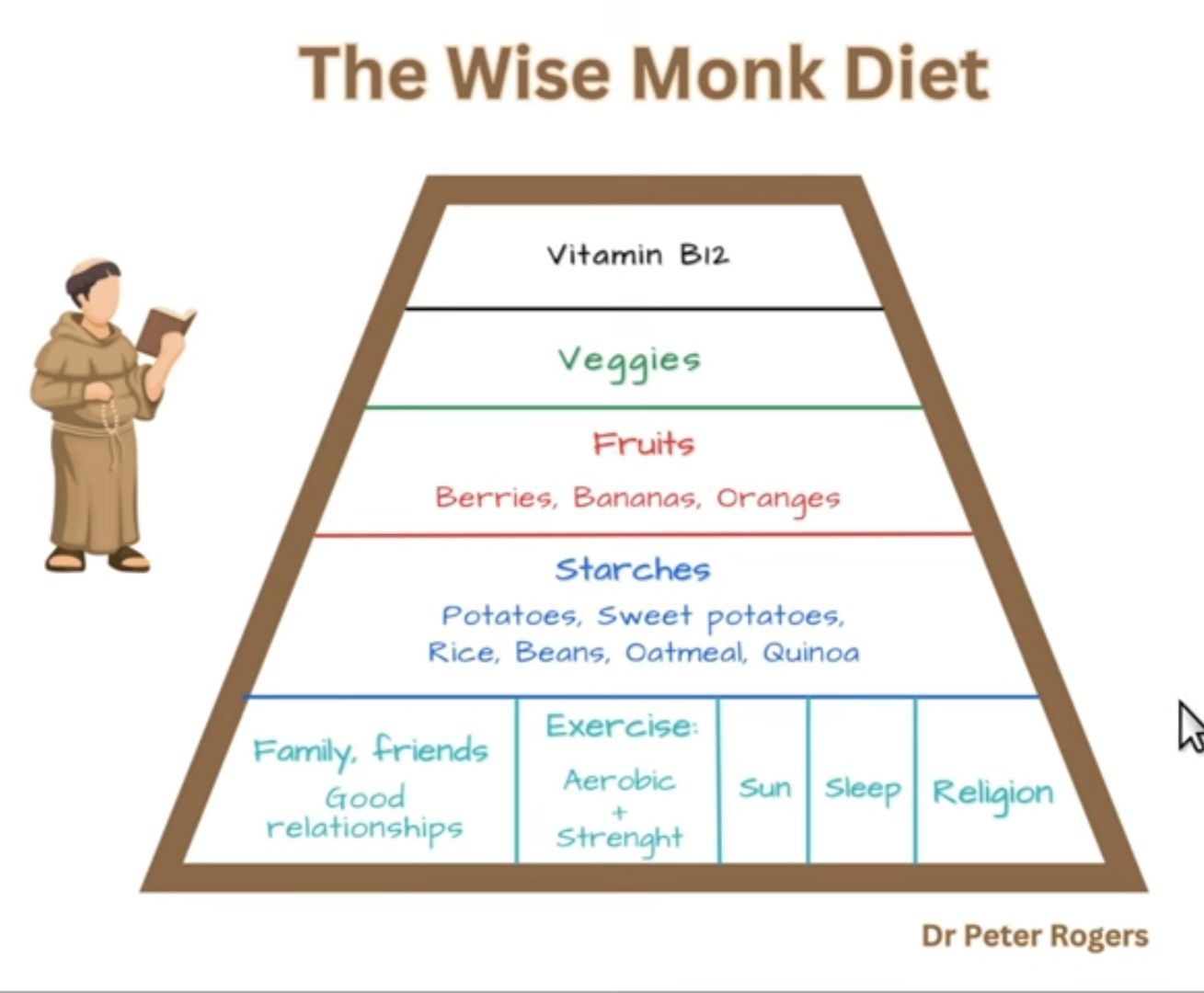
🥦 1. Whole‑food, plant‑focused eating Starch + vegetable: Every meal centers around these two—the starch to fuel energy, the vegetables to deliver nutrients and fiber
No meat, dairy, oils: Rogers argues these raise blood sugar, pack in calories, and promote heart disease—plant foods reverse those risks, lower cholesterol, and open arteries via nitric oxide .
Why: Plants have protective effects—fiber, antioxidants, nitrates—all supporting metabolic health and vascular function. Avoiding processed fats reduces excess caloric density and inflammation.
⏳ 2. Intermittent fasting / time-restricted eating OMAD on workdays (One Meal A Day); late 2 meals on rest days
Fasting windows commonly span ~16‑24 hours, often skipping breakfast
Why: Fasting naturally reduces caloric intake, resets hedonic appetite drives, may enhance autophagy, and frees up time—Rogers notes improved mental focus in fasted morning hours .
🧂 3. Exclusion of processed, inflammatory foods Zero oils, junk food, fast food: Oils are refined calorie bombs; processed foods bring sugars, trans‑fats, and inflammatory additives .
Only whole-food bread: Ideally homemade sourdough from freshly milled whole grains, no additives .
Why: These foods lead to chronic inflammation, weight gain, and poor satiety. Replacing them with minimally processed options helps regulate appetite and improve nutrient intake.
🌿 4. Spices & herbs for anti‑inflammatory support Plenty of turmeric, ginger, oregano, cinnamon, etc.—blended into meals, as shown by Penn State research
Why: Chronic inflammation is linked to many modern diseases. Spices boost natural anti-inflammatory enzymes and flavonoids, supporting long-term health.
🔄 5. Simplicity, consistency, sustainability Monk‑like discipline: Fasting every day, sticking to the plan—no cheat days, no grazing .
Maintain “half” habits: After peaks (like Dry January or intense training), continue at half to preserve health gains
Why: This isn’t a short-lived diet—it’s a lifelong adjustment. Consistency encourages sustainable lifestyle change and avoids relapse cycles.
✅ Why Rogers Recommends This Diet: he says it RESETS your internal “thermostat” (hunger set-point) using whole foods and fasting—calories self-regulate.
Optimize arterial health—plant nitrates and spice compounds promote vasodilation and reduce risk factors like high cholesterol.
Reduce systemic inflammation—junk foods and refined oils fuel inflammatory pathways linked to modern chronic disease.
In conclusion Rogers’ “Spartan/Monk” Diet is a disciplined, vegan, time-restricted eating plan. It focuses on resetting hunger, lowering inflammation, optimizing vascular health, and simplifying life to make healthy habits sustainable. It’s built on scientific principles and aligned with both ancient practices and modern research.
Dr. Rogers advocates that consistent, varied exercise is essential—not just for physical health but also for long-term brain resilience, cancer prevention, stress regulation, and metabolic balance. When combined with nutritional changes, it becomes a powerful tool for vascular, cellular, and cognitive well-being.
Here’s a brief summary of the New York Post article:
A new study from Mass General Brigham found that eating a lot of ultra-processed foods (UPFs) is linked to a higher risk of early-onset colorectal cancer precursors in adults under 50. (New York Post)
The research looked at nearly 30,000 women (from the Nurses’ Health Study II) over more than 20 years, combining diet questionnaires with endoscopy (colonoscopy) data. (New York Post)
Women who reported eating about 10 servings of UPFs per day had a 45% higher risk of developing adenomas (precancerous colon polyps) versus those eating only ~3 servings. (New York Post)
These UPFs are mostly ready-to-eat foods high in sugar, salt, saturated fat, and artificial additives. (New York Post)
Even after adjusting for other risk factors (like BMI, diabetes, low fiber), the association remained. (New York Post)
The risk appeared to scale with consumption (“fairly linear”): more UPFs = more risk. (New York Post)
This is the first study to directly link UPFs with early-onset (under-50) colorectal cancer risk, not just cancer in older adults. (New York Post)
However, diet doesn’t explain all of the rise in early-onset cases — researchers say other factors must also be at play. (New York Post)
Some experts note the study is observational, so it doesn’t prove UPFs cause cancer. (New York Post)
The study was funded by several major health organizations, including the NIH and the American Cancer Society. (New York Post)
– The video begins by marveling at the ability of nature to transform food into human life, emphasizing that even fast food and ultra-processed foods can contribute to healthy child development. – A question is raised regarding the impact of different food types on children’s health, particularly in light of increasing cases of young people with serious health conditions like stage 4 colorectal cancer. – Dr. Kimmy Ing, an oncologist, shares her experiences observing a rise in young patients without known risk factors, suggesting that early life dietary factors may play a role in these health issues. – The importance of understanding early dietary habits is highlighted, noting that patients may struggle to recall what they ate as children, which complicates the investigation of potential links to their current health conditions.
Influence of Early Nutrition
– Dr. Federica Amadi, a nutrition scientist, discusses the significance of diet and exercise in women’s health, particularly during the menopause transition, and references a large-scale trial on the subject. – The conversation shifts to how to effectively communicate health and nutrition to children, emphasizing the importance of engaging them with the health benefits of various foods. – The concept of categorizing foods into “everyday foods” and “sometimes foods” is introduced, advocating for a balanced approach to food consumption rather than labeling foods as strictly good or bad. – Engaging children with the gut microbiome is suggested as a fun way to teach them about nutrition, highlighting the importance of colorful fruits and vegetables for their health.
The Golden Window of Opportunity
– The discussion moves to the critical first thousand days of life, from conception to the second birthday, as a vital period for health development, where organ systems and brain growth are established. – Research indicates that the composition of an individual’s gut microbiome during these early years is difficult to alter later in life, emphasizing the need for proper nutrition during this formative period. – The impact of cesarean sections on gut microbiome development is addressed, noting that children born this way may face different health outcomes compared to those delivered vaginally. – Breastfeeding is discussed as a crucial factor that can help mitigate some of the negative effects associated with cesarean births, as it influences the development of the gut microbiome.
Maternal Nutrition and Public Health
– The conversation shifts to maternal nutrition, highlighting the misconceptions surrounding dietary needs during pregnancy and the importance of a healthy diet for both mothers and their unborn children. – Research indicates links between maternal dietary patterns high in processed foods and increased risks of health issues, including colorectal cancer in offspring. – The need for public health initiatives to prioritize maternal health and nutrition is emphasized, particularly in low-income communities where access to healthy food is limited. – The discussion reflects on the importance of educating mothers about nutrition during pregnancy and providing them with the necessary resources to achieve optimal health outcomes for themselves and their children.
Changing Dietary Patterns in Children
– The video highlights the alarming trend of children being raised on highly processed foods, particularly in the UK, where breastfeeding rates are low and formula feeding is prevalent. – Concerns are raised about the nutritional adequacy of processed baby foods, which often lack essential nutrients and fiber, leading to potential long-term health issues. – The importance of improving school food programs and advocating for healthier food options in schools is discussed as a means to combat poor dietary habits in children. – The role of government legislation in regulating food marketing and promoting healthier eating habits among children is emphasized as a necessary step towards improving public health.
The Role of Protein and Dietary Guidelines
– The conversation delves into the complexities of protein consumption, comparing the health impacts of red meat and sugar, and discussing the need for a balanced approach to dietary protein sources. – The discussion highlights how excessive protein intake, particularly from animal sources, can be linked to various health issues, including cancer and metabolic disorders. – The importance of focusing on plant-based proteins and maintaining a balanced amino acid profile is emphasized as a healthier dietary strategy. – The video concludes by advocating for a shift in public perception regarding dietary guidelines, emphasizing the need for evidence-based information to guide healthy eating practices.