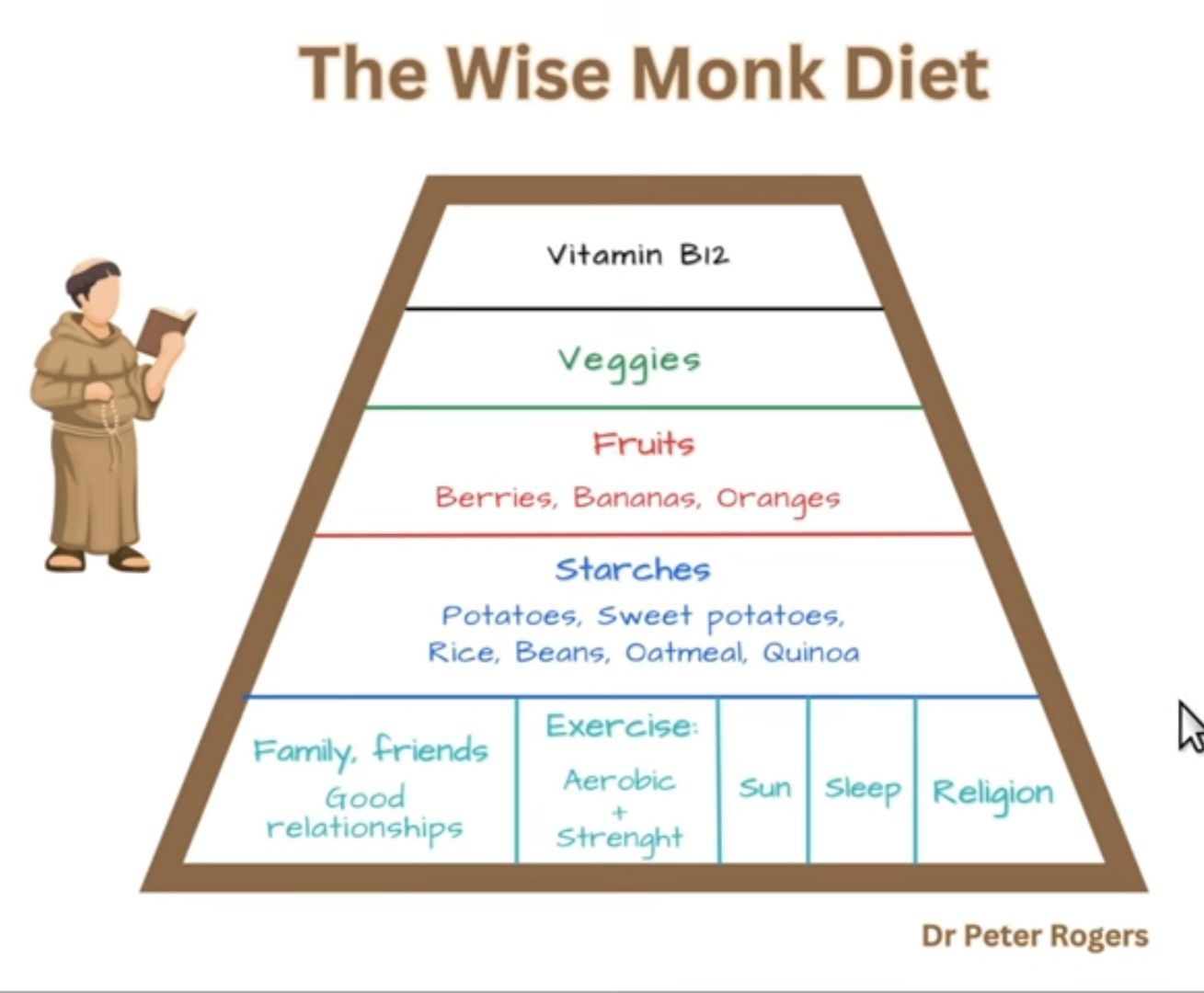
🥦 1. Whole‑food, plant‑focused eating
Starch + vegetable: Every meal centers around these two—the starch to fuel energy, the vegetables to deliver nutrients and fiber
No meat, dairy, oils: Rogers argues these raise blood sugar, pack in calories, and promote heart disease—plant foods reverse those risks, lower cholesterol, and open arteries via nitric oxide .
Why:
Plants have protective effects—fiber, antioxidants, nitrates—all supporting metabolic health and vascular function. Avoiding processed fats reduces excess caloric density and inflammation.
⏳ 2. Intermittent fasting / time-restricted eating
OMAD on workdays (One Meal A Day); late 2 meals on rest days
Fasting windows commonly span ~16‑24 hours, often skipping breakfast
Why:
Fasting naturally reduces caloric intake, resets hedonic appetite drives, may enhance autophagy, and frees up time—Rogers notes improved mental focus in fasted morning hours .
🧂 3. Exclusion of processed, inflammatory foods
Zero oils, junk food, fast food: Oils are refined calorie bombs; processed foods bring sugars, trans‑fats, and inflammatory additives .
Only whole-food bread: Ideally homemade sourdough from freshly milled whole grains, no additives .
Why:
These foods lead to chronic inflammation, weight gain, and poor satiety. Replacing them with minimally processed options helps regulate appetite and improve nutrient intake.
🌿 4. Spices & herbs for anti‑inflammatory support
Plenty of turmeric, ginger, oregano, cinnamon, etc.—blended into meals, as shown by Penn State research
Why:
Chronic inflammation is linked to many modern diseases. Spices boost natural anti-inflammatory enzymes and flavonoids, supporting long-term health.
🔄 5. Simplicity, consistency, sustainability
Monk‑like discipline: Fasting every day, sticking to the plan—no cheat days, no grazing .
Maintain “half” habits: After peaks (like Dry January or intense training), continue at half to preserve health gains
Why:
This isn’t a short-lived diet—it’s a lifelong adjustment. Consistency encourages sustainable lifestyle change and avoids relapse cycles.
✅ Why Rogers Recommends This Diet: he says it RESETS your internal “thermostat” (hunger set-point) using whole foods and fasting—calories self-regulate.
Optimize arterial health—plant nitrates and spice compounds promote vasodilation and reduce risk factors like high cholesterol.
Reduce systemic inflammation—junk foods and refined oils fuel inflammatory pathways linked to modern chronic disease.
Cultivate mental clarity & simplicity—fasted productivity, predictable meals, fewer decisions.
In conclusion
Rogers’ “Spartan/Monk” Diet is a disciplined, vegan, time-restricted eating plan. It focuses on resetting hunger, lowering inflammation, optimizing vascular health, and simplifying life to make healthy habits sustainable. It’s built on scientific principles and aligned with both ancient practices and modern research.
Dr. Rogers advocates that consistent, varied exercise is essential—not just for physical health but also for long-term brain resilience, cancer prevention, stress regulation, and metabolic balance. When combined with nutritional changes, it becomes a powerful tool for vascular, cellular, and cognitive well-being.