Ingredients and equipment:
Dry, raw chickpeas (also known as garbanzo beans)
High-speed blender (such as a Vitamix or Blendtec)
Fine mesh sieve or strainer
Airtight container for storage
Instructions:
Ensure everything is dry. For the best results, make sure both your chickpeas and the inside of your blender jar are completely dry before you begin. Any moisture can cause the flour to clump.
Add chickpeas. Pour the dried chickpeas into your high-speed blender. A good ratio is 1 cup of dried chickpeas, which will yield approximately 1 1/2 cups of flour. You can blend larger batches at once with a powerful blender.
Blend the chickpeas. Secure the lid and start blending. Begin on a low speed, then gradually increase to the highest setting. Blend for about 1 to 2 minutes, until the chickpeas are finely ground. The initial grinding can be very loud, but the noise will subside as the legumes break down.
Sift the flour. Pour the ground chickpeas into a fine mesh sieve placed over a large bowl. Sift the powder to separate the fine flour from any larger, unground pieces.
Re-blend coarse pieces. Put any leftover coarse pieces back into the blender and blend again. This ensures you get the maximum amount of fine flour from your batch of chickpeas.
Store the flour. Store your fresh chickpea flour in an airtight container. It can be kept in a cool, dark pantry for several weeks or in the refrigerator or freezer for longer storage.
Tips for success
For the finest flour: Some home-blended chickpea flour may be coarser than store-bought varieties, with a texture similar to cornmeal. Sifting and re-blending is the key to achieving the finest possible texture.
Use smaller batches for less powerful blenders: If you don’t have a high-speed blender, you can use a regular blender, food processor, or even a coffee grinder. Work in small batches (about 1/4 cup at a time) for the best results and to avoid overtaxing your appliance.
Roasting for flavor (optional): For a nuttier flavor, you can lightly toast the chickpeas on a baking sheet before blending. Let them cool completely before grinding.
Month: November 2025
Cauliflower Banana Corn Bread
🌽 Low-SOS Cornbread (Cauliflower-Banana Version)
Ingredients
Wet blend:
2 cups frozen cauliflower florets (thawed or briefly microwaved)
1 ripe banana
1 cup unsweetened plant milk (soy, almond, oat, etc.)
1 tablespoon apple cider vinegar (or white vinegar)
1–2 tablespoons honey (optional, for mild sweetness)
Dry mix:
2 cups cornmeal (medium grind)
1 cup whole wheat flour (or all-purpose, or oat flour)
1½ teaspoons baking powder
Optional: ½ teaspoon baking soda (if you want more lift with the vinegar)
Optional: pinch of salt (skip if you want strictly SOS)
Instructions
Preheat oven to 375°F (190°C). Lightly grease a large rectangular glass baking dish (or line with parchment if avoiding oil).
Blend all wet ingredients (cauliflower, banana, plant milk, vinegar, honey) until smooth.
Mix dry ingredients in a large bowl.
Add the blended mixture into the dry ingredients and stir until just combined. The batter should be thick but pourable.
Pour into the baking dish and smooth the top.
Bake for 35–45 minutes, or until golden and a toothpick comes out clean.
Cool slightly before cutting into squares.
Texture & Notes
It will have a moist, cake-like crumb — not quite like traditional cornbread, but fluffy and lightly sweet.
The vinegar + baking powder combo gives it rise.
Cauliflower adds volume and tenderness without added fat.
*******
Tips to ensure it doesn’t stick:
Let the cornbread cool for 10–15 minutes before slicing—it firms up slightly and is easier to remove.
Use a silicone spatula or flat knife around the edges to gently loosen it.
If you want extra insurance without oil, you can line the dish with parchment paper, leaving a little overhang for easy lifting.
86% of PCR-Positive
“COVID Cases”
Were Not Real
Infections
Nov 8, 2025
By Nicolas Hulscher, MPH
A bombshell peer-reviewed study out of Germany just dismantled the scientific foundation used to justify lockdowns, social distancing, and vaccine mandates.
Researchers analyzed data from the Akkreditierte Labore in der Medizin (ALM) — a nationwide consortium of authority-accredited medical laboratories that performed roughly 90% of all SARS-CoV-2 PCR tests in Germany between 2020 and 2023.
When researchers compared the ALM’s week-by-week PCR positivity rates with the same labs’ IgG antibody testing data — essentially measuring who truly developed infection-induced immunity — they discovered something staggering:
Only about 14% of those who tested PCR-positive during the early pandemic period (2020–mid-2021) actually developed antibodies — meaning most early “cases” were never real infections.
What This Means
Mass PCR testing grossly inflated case numbers worldwide. Every nation that used similar CT thresholds likely overcounted “infections” by an order of magnitude.
Lockdowns and mandates were built on a false metric. The German “7-day incidence” used to trigger restrictions was statistically meaningless — and identical logic applied in the U.S., U.K., and elsewhere. In America, the entire “15 Days to Slow the Spread” campaign was predicated on the same inflated PCR scam.
Authorities suppressed representative serology data. Germany’s RKI and Ministry of Health had access to these ALM antibody results but never disclosed them — despite their policy relevance.
Rewriting pandemic history. If only 10–14% of reported PCR “cases” during the first year reflected true infections, then the infection-fatality rate, transmission models, and emergency declarations were all built on sand. By the end of 2020—months before vaccination began—roughly one-quarter of Germany’s population already carried natural antibodies. In other words, while authorities were declaring an uncontrolled crisis, herd-level immunity was already taking shape. By late 2021, nearly the entire population was IgG-positive. The evidence shows that pandemic policy was driven not by infection reality, but by a diagnostic illusion
Nov 7, 2025 of Low-SOS Vegan Plan
(This blog began 3/15/2015)
MEDITATION:
* Charles Capps podcast
* Christ the Healer audiobook
EXERCISE:
* Jog 5k outdoors
* Market walk-about 20 minutes
* PT APP workout
–lower body stretch/stengthening
WATER:
(2) × (32) = 64 oz (+)
EATS:
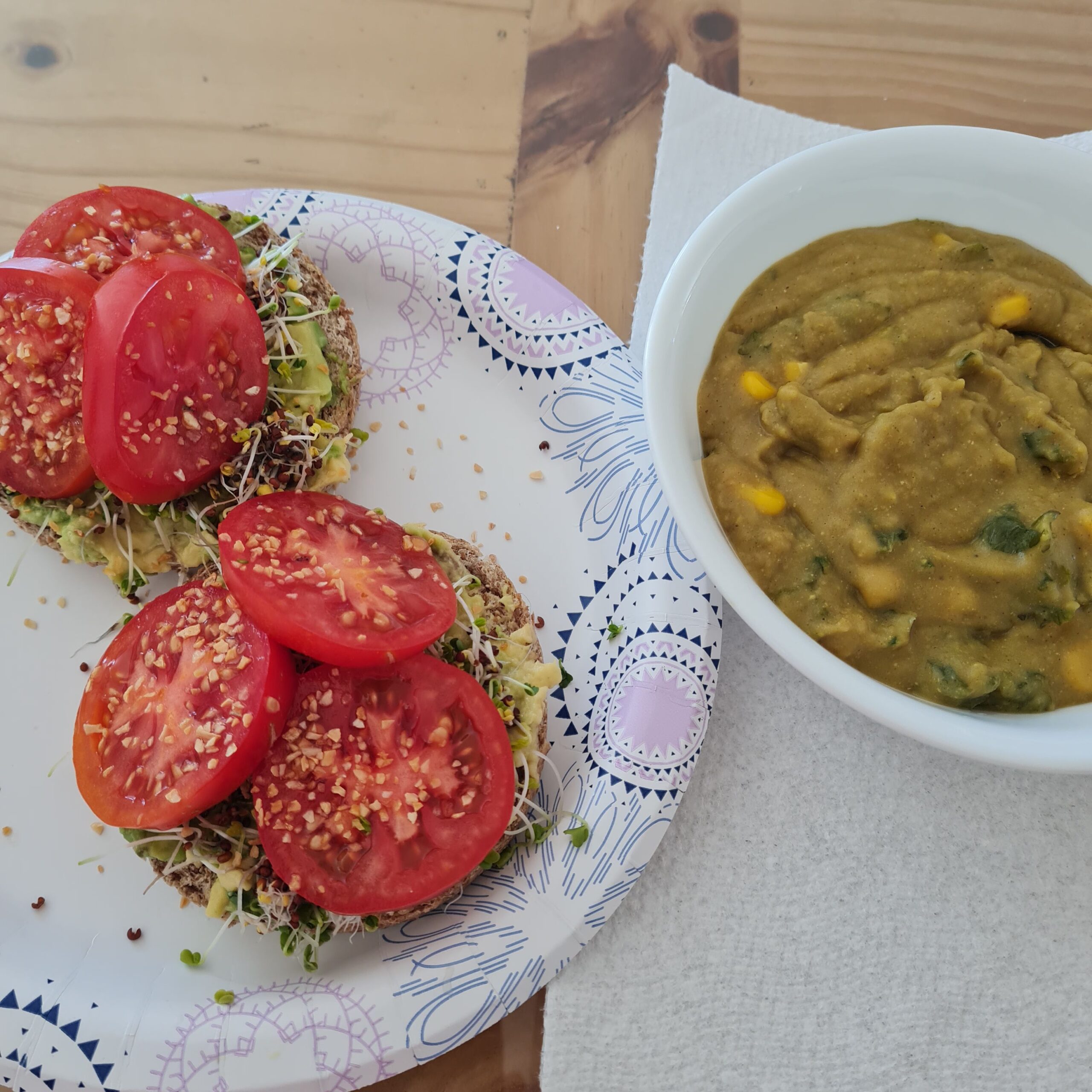
* Leftover corn chowder & Ezekiel 4:9 sprouted grain muffins w/ avocado, tomato, broccoli sprouts
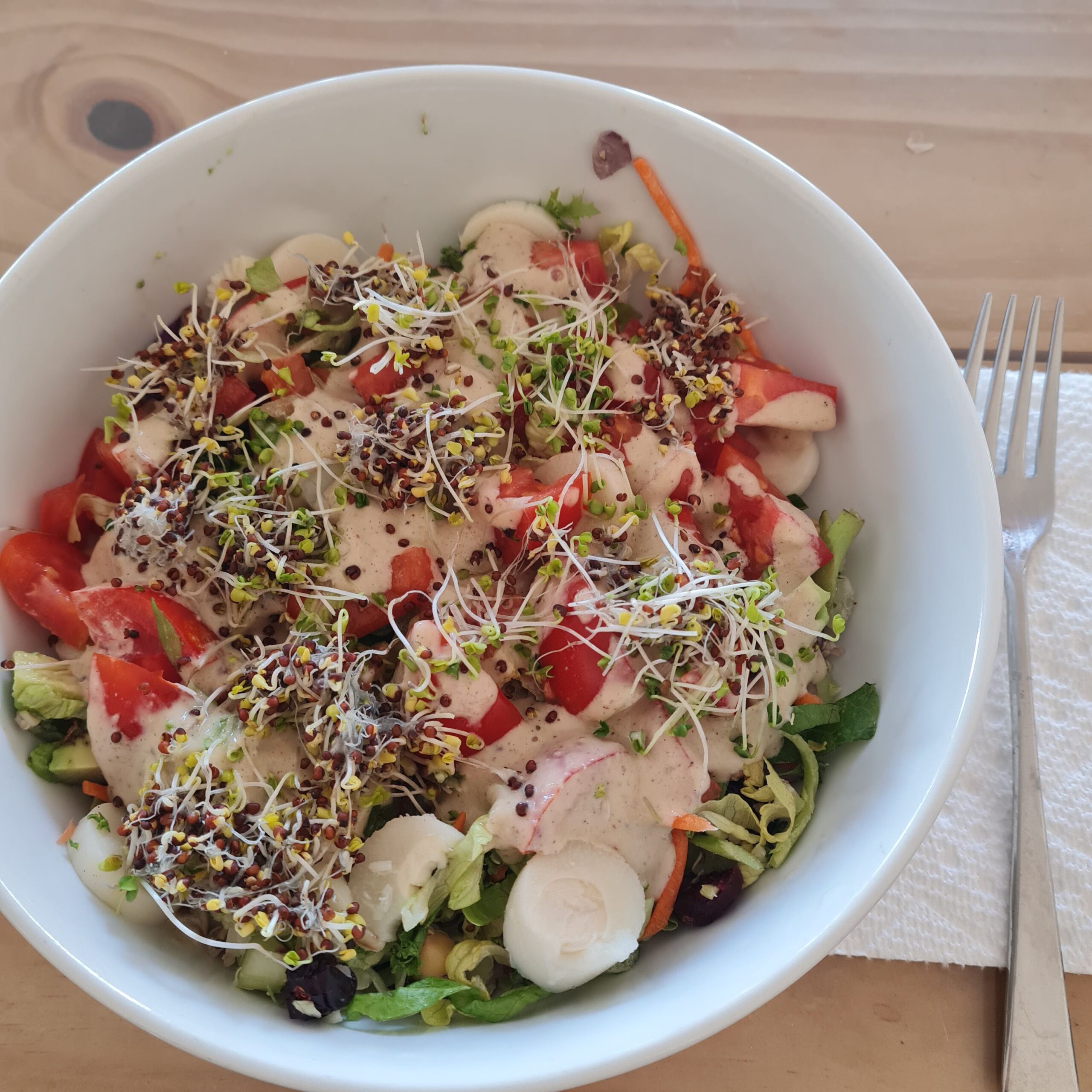
*chopped gorilla salad w/ homemade ranch dressing
* black-eyed chili
* red & green grapes
* airpopped popcorn w/ peanuts & a few sweet pre-popped kernels
… SUN HAS SET …
Cmmt: XL indicates uncommonly excessive food, and wautéed means water-sautéed
Mark Cuban DISMISSES Jay Bhattacharya’s Study – Rav Arora Pushes Back
In this 12-minute exchange, Mark Cuban defended his COVID stance with a mix of moral certainty and fuzzy math. I argued the opposite — that by late 2021, the science no longer supported mass vaccination for the young and healthy.
Peer-reviewed data from Stanford’s John Ioannidis and Jay Bhattacharya showed a 0.003% infection-fatality rate for ages 20–29 — meaning roughly three deaths per 100,000 infections. By contrast, the best available data showed roughly a 1-in-800 rate of serious adverse events from the mRNA vaccines. That trade-off simply didn’t justify universal vaccination.
Mark’s counter was that healthy people “interact with” the immunocompromised, and that even short-term reductions in spread justified mandates. But that argument collapsed once it became clear — as global data showed — that the vaccines did not stop transmission beyond a couple of months. At that point, the shot was a personal medical choice, not a moral obligation.
When I pointed out that nearly every country followed the same mistaken playbook, Mark insisted that “everyone in the world can’t be wrong.” But history says otherwise — from nutrition science to public health, consensus has often been precisely what blinded us. Sweden, Denmark, and Finland all fared better by avoiding coercion.
Mark also dismissed the growing evidence of myocarditis in young men, and brushed off the unusually high adverse-event rates as “one paper.” Yet that paper — a reanalysis of Pfizer and Moderna’s own trial data — found more serious vaccine injuries than hospitalizations prevented.
In the end, Mark’s defence rested not on evidence but on faith — faith that “doing something” was always better than restraint. But for healthy young people, that faith came with real biological costs and no clear social gain. The truth remains: Joe Rogan was right, and the data have vindicated the skeptics.
Substack link here.
Whole Corn Butter
Ingredients
2 cans Sweet Corn, no salt added (15oz ) OR…16 oz bag Frozen Corn ((thawed))
1-2 Tbs Water
1 Tbs Lemon Juice
½ tsp Salt
¼ tsp Garlic Powder
OR..1-2 cloves Freshly Minced Garlic ((for garlic butter))
Instructions
* Drain liquid from cans of corn and add the drained corn directly to your blender. If using frozen, add the thawed bag of corn instead.
* Add remaining ingredients and blend until smooth and creamy. If using frozen you may need to add an additional tablespoon of water. * For more of a ‘garlic butter’ taste, add 1-2 cloves of freshly minced garlic instead of the powder.
* Scrape into pan and simmer on low heat until slightly thickened.
For cornmeal recipe (instead of whole corn) try THIS.
Cauliflower Soup
Ingredients
1 large head of cauliflower, cut into small florets
3 tbsp veg broth for sautéing
1 small fennel bulb, roughly chopped
1 shallot, chopped
2 garlic cloves, finely diced or minced
⅔ cup water
3 ⅓ cups veg broth
1 ¼ cups nut cream (optional)
2 bay leaves
1 small handful of chives, sliced
Method
Preheat the oven to 400°F
Toss cauliflower in 2 tbsp broth on a baking sheet. Season with salt and pepper.
Roast for 30–35 minutes (tossing halfway) until florets are browned and tender.
While the cauliflower is roasting, heat 1 tbsp broth in a large saucepan over medium heat.
Wauté the shallot, fennel, and garlic until softened, 5–8 minutes. Add ⅔ cup water and cook until mostly evaporated, about 5 minutes.
Add roasted cauliflower, broth, nut cream, and bay leaves. Season lightly with salt and pepper.
Bring to a boil, reduce heat, and simmer until cauliflower is very tender, about 20 minutes.
Remove bay leaves from soup. Allow the soup to cool slightly, then blend until smooth using a blender or immersion blender.
Serve topped with garnish.
Tomato & White Bean Soup
Ingredients
1.5 tablespoons veg broth for sautéing
2 large carrots, chopped
1 medium onion, diced
2 cloves garlic, minced
2 × 14 oz cans whole or chopped tomatoes
2 × 14 oz cans cannellini beans
3 cups water or vegetable broth
1 1/4 cups single cream
Handful fresh basil, to serve
Method
Add the broth to a large saucepan over medium heat.
Add the carrots and onions, and cook until softened.
Add the garlic and cook for an additional 3–4 minutes.
Add the tomatoes and lower the heat to medium-low. Cook for 25 minutes to reduce the acidity of the tomatoes.
Add the beans and stock, season with salt and pepper, and bring to a simmer for an additional 10 minutes.
Turn off the heat and add the cream. Transfer to a blender or use an immersion blender until smooth.
Sprinkle basil on top.
Beet Soup
Ingredients
2 tbsp veg broth & 1 onion, diced
2 garlic cloves, finely diced or minced
1 tsp ground paprika
2 1/2 cups diced beets
2 1/2 cups mushrooms, sliced
1 carrot, diced
1L veg broth
1 x 14oz can chopped tomatoes
1 1/4 cups potatoes, cut into cubes
1 1/3 cup plain vegan yoghurt (optional)
1 cup fresh flat leaf parsley, roughly chopped
Method
Heat 2 tbsp of broth in a large saucepan, over medium heat. Fry the onion, garlic, and paprika, until softened.
Add the beets, mushrooms, carrots, and cook until softened.
Pour in the stock and tomatoes, and season with salt and pepper. Stir to combine and bring to a boil.
Reduce to a simmer, cover and cook for up to 1 hour.
Add the potatoes and cook uncovered for 20 – 30mins, or until the potatoes are tender.
Ladle into bowls, and top with a spoonful of yoghurt and chopped parsley.
Nov 6, 2025 of Low-SOS Vegan Plan

(This blog began 3/15/2015)
MEDITATION:
* Healing Scriptures by Revelation TV
* Nothing But Bible podcast
* Charles Capps podcast
* Christ the Healer audiobook
EXERCISE:
* Walk 30 minutes about campus, up/down stairs
* Standing lecture 2.5 hours
* PT APP workout
–lower body stretch/stengthening
WATER:
(2) × (32) = 64 oz (+)
EATS:
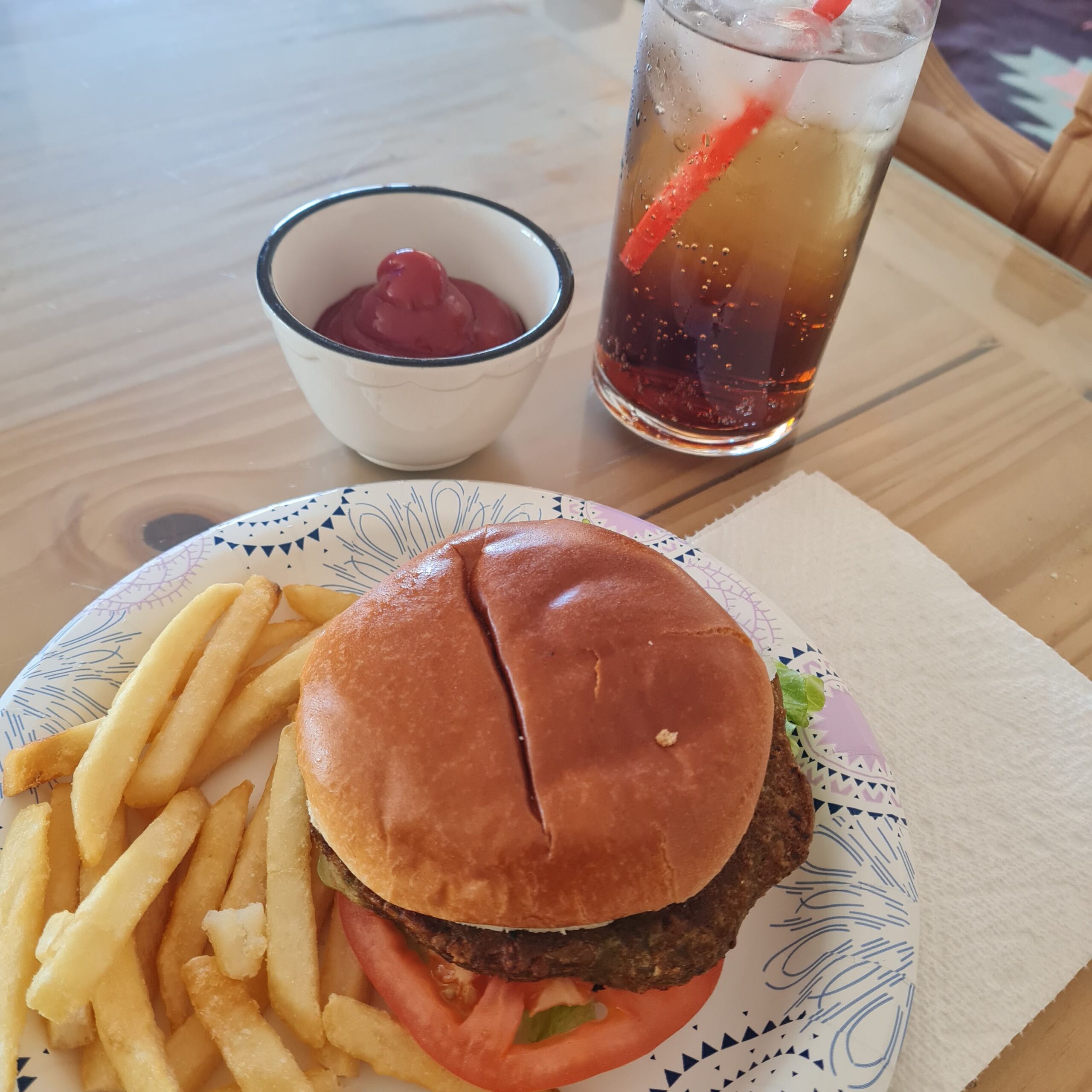
* Farmer Boy sweet potato/veg burger w/o sauce add mustard, served w/ XL-fries & low sugar soft XL-drink (plain sparkling water mix)
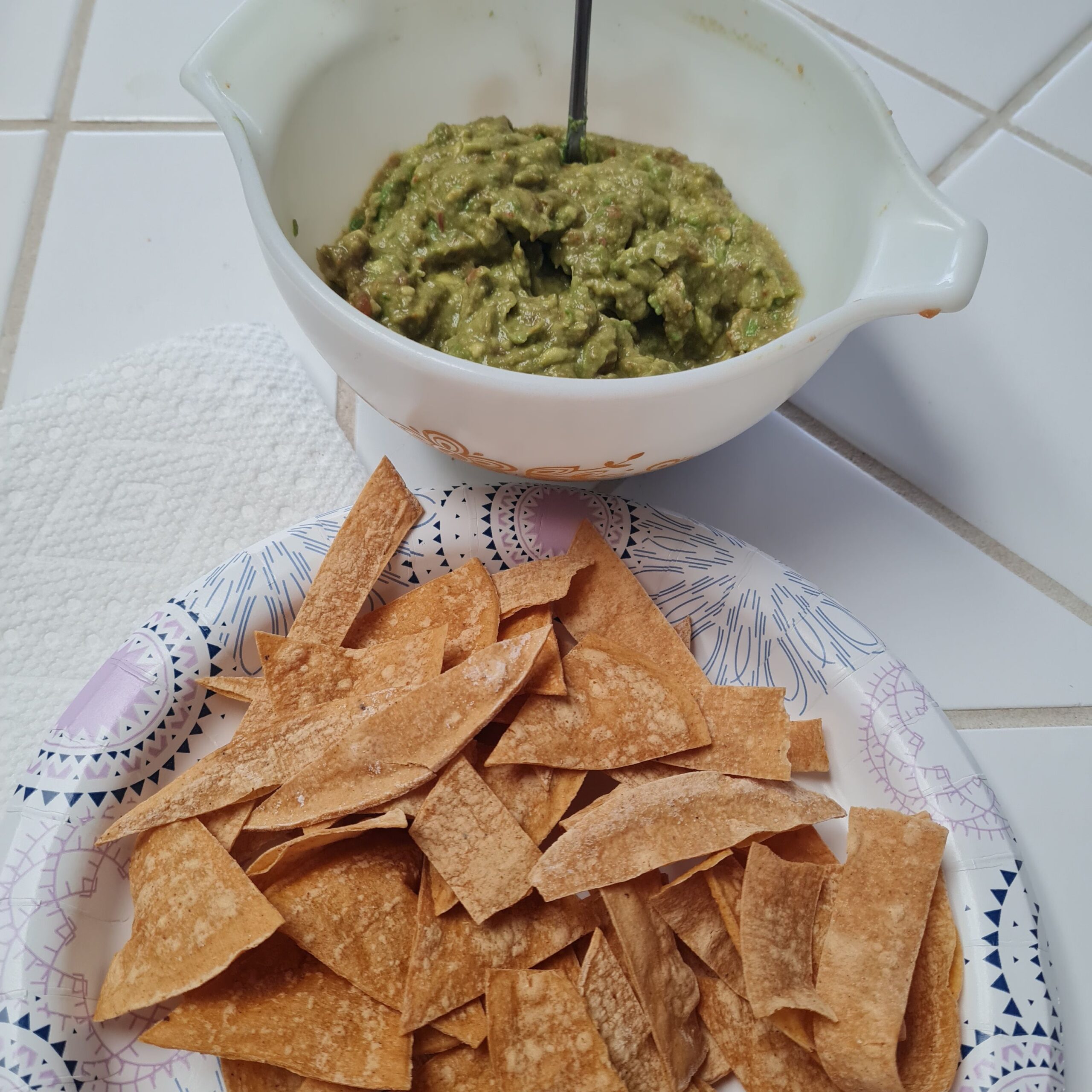
* oil-free air-fried corn tortilla chips w/ guacamole
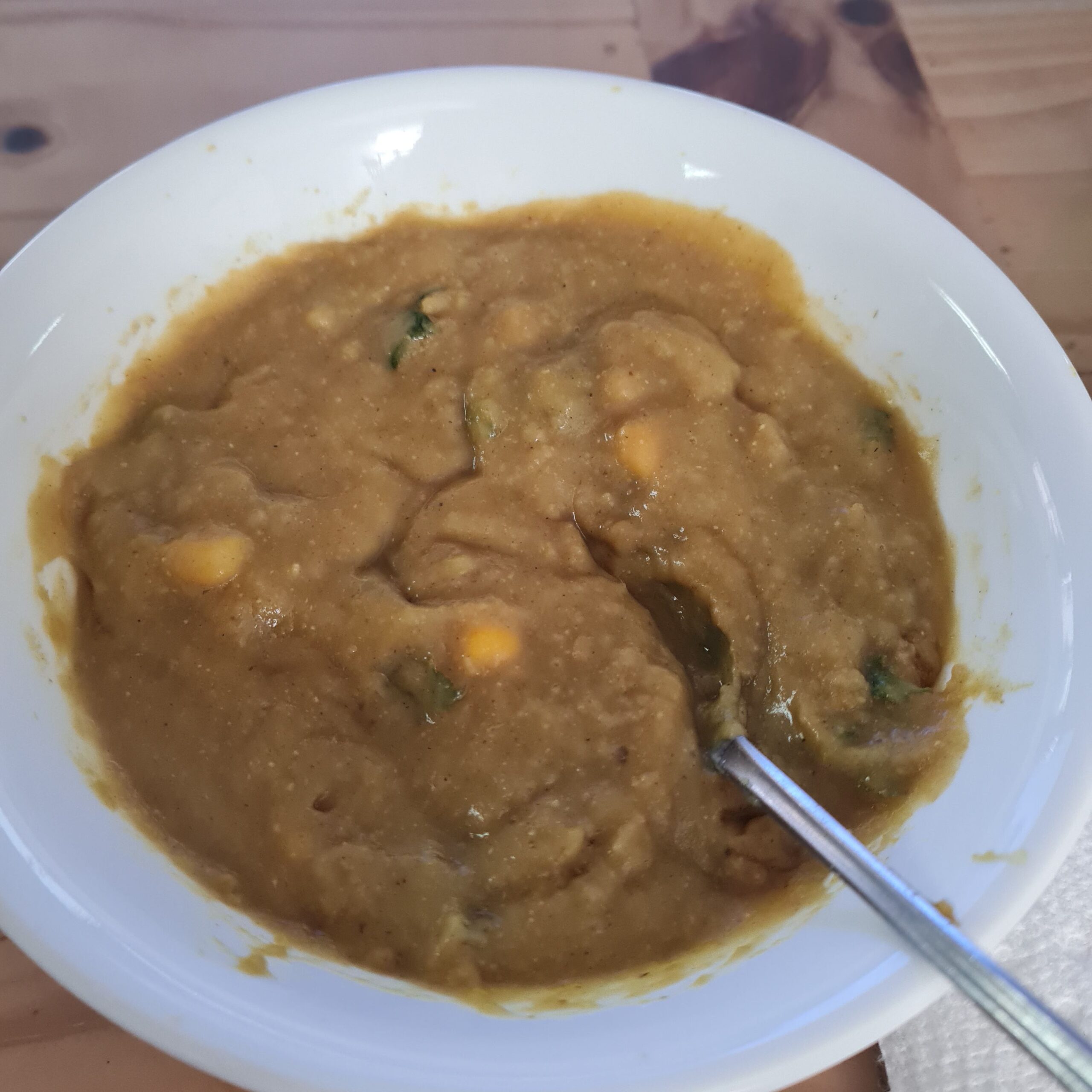
* leftover corn chowder
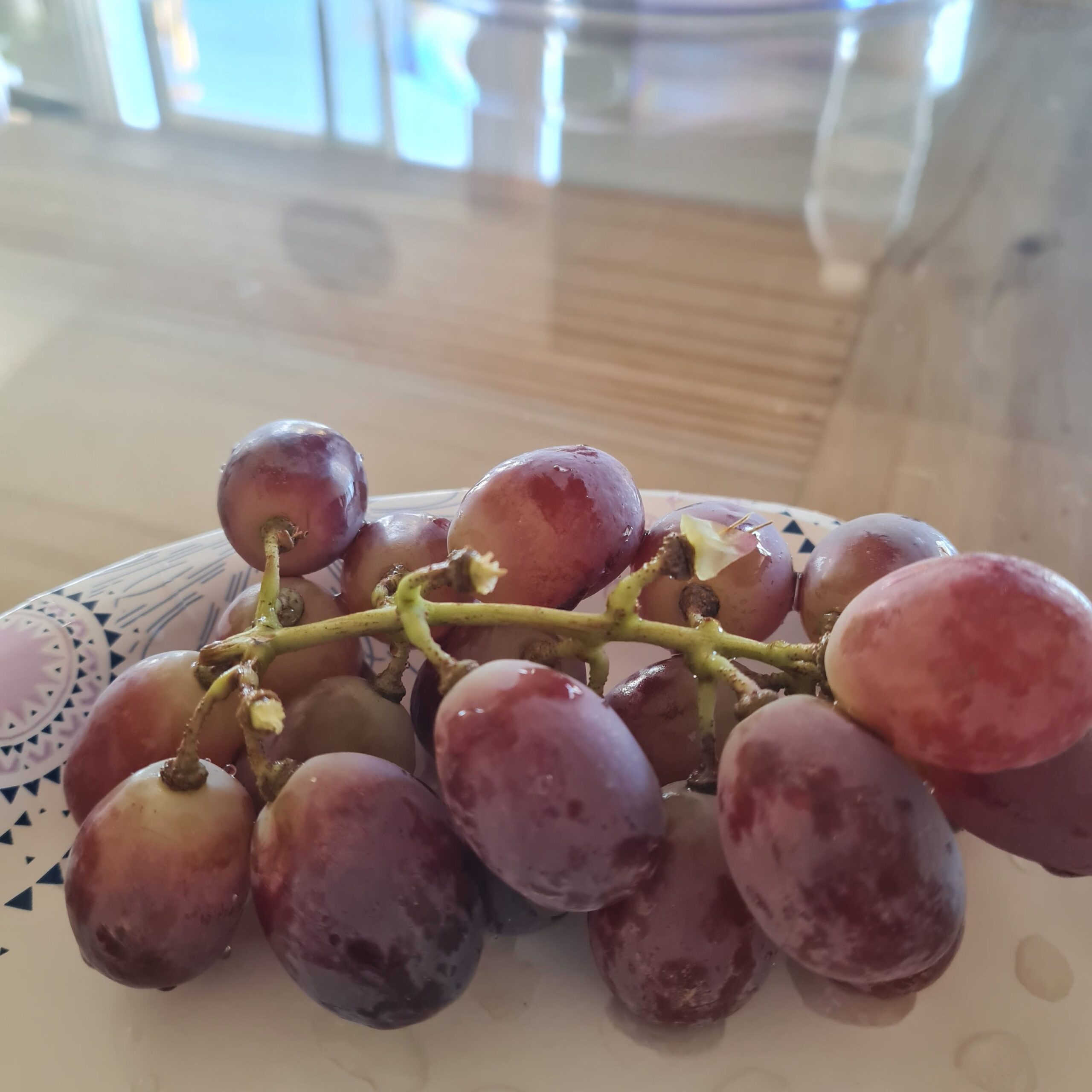
* red grapes
* airpopped popcorn w/ jr mints
… SUN HAS SET …
Cmmt: XL indicates uncommonly excessive food, and wautéed means water-sautéed