John P.A. Ioannidis
October 2, 2020
Scientific truth should not be decided by the bulk of signatories, argues John Ioannidis
Petitions and open letters signed by large numbers of scientists are not new, but they have proliferated in the covid-19 era. [1,2] They have a clear role when it comes to questions of ethics, social problems, and injustices. With monumental consequences from both the pandemic and the response to the pandemic, debating ethical and social issues is the right of every citizen, including scientists. A collateral damage, however, is when these documents are aimed to prove or disprove scientific positions.
Scientists may take pride that their advocacy can save lives, mobilize resources for worthy enterprises, or teach leaders and fellow citizens. Petitions often convey a sense of urgency, conviction, and resolution. Different petitions may fervently support opposing positions: e.g. be in favour or against measures such as lockdowns or school closures/openings. They may press on issues of transmission (e.g. whether airborne, aerosol transmission is common) or risk (e.g. whether children are at risk). Sometimes, they acquire a component of personal attack, lambasting (or supporting) government officials for recommendations and actions. Various media and social media further reverberate these documents. Participation of the general public in these debates is welcome, but bounds of civility are sadly often crossed and many scientists, signatories or opponents, get unjustifiably smeared. However, most importantly, petitions cannot and should not be used as a means to prove that the positions of the signatories are scientifically correct. As it has been previously observed, this is a fallacy, an argumentum ad populum, implying that the larger the number of scientists who sign, the more valid their scientific positions are. [3,4] Vote counting is a faulty method of scientific inference. Science is replete of situations where vehement majorities have held wrong beliefs.
Signatory credentials carry little weight for further validating the veracity of petitioned materials. Invoking authority is yet another fallacy. Expert opinions are at the bottom of the evidence hierarchy. Angry, scared, opinionated experts have even less trustworthiness. Petitions over-confident of their alleged know-how can even be embarrassing, when the recruited experts actually do not even cover key dimensions of necessary expertise. E.g. microbiologists and infectious disease experts may not know enough about diseases of despair, economics, and social meltdown dynamics; and economists may lack knowledge about virology, immunology, or intensive care.
There are many other drawbacks in using petitions to prove scientific points. First, absolute knowledge that can be summarized with a few paragraphs or bullet points (an unavoidable feature of letter-writing) is almost non-existent across science. Good science is nuanced. Forced consensus or over-simplification are detrimental.
Second, signatories may not fully agree or may even partly disagree with what they co-sign. A previous survey examining the positions of signatories on a hot topic (denouncing “statistical significance”) showed that several of them had not read the petition, or read it after it was published; many of them held opposite views to several points made by the signed petition; and most had adopted research practices in their recent work that contradicted what they were espousing in the letter. [3]
Third, petitions create covert coercion, stifling academic freedom. When academic leaders encourage their faculty to sign, coercion exists, even if the language of the invitation is relaxed. Younger or more junior faculty members depend on their senior leaders for their academic prospects. Not signing a document espoused by their supervisor may be an embarrassment. Many may compromise to avoid appearing defiant.
Fourth, petitions create a false sense of certainty for a new pandemic where uncertainty may unavoidably exist on important questions. [5] This hinders scientific inquisitiveness. Many scientists may feel threatened by the mass mentality expressed by these letters and by the accompanying media and social media smearing and they may self-censor their high-risk or unpopular ideas. Challenging orthodoxy is never easy, but it becomes almost impossible when proponents of whatever orthodoxy speak out vehemently about how incontestable “their truth” is smearing their opponents.
Fifth, exaggerated certainty can backfire and damage science at large, if some vehemently held positions are refuted downstream by accumulating evidence. The anti-vaccine movement and climate emergency deniers are already drawing ammunition from the reversals of opinion and policy during the covid-19 pandemic. Clearly the strategy of deniers is inappropriate, since the knowledge we have about covid-19 and how to handle it is still evolving, while we have solid evidence about the efficacy and safety of MMR or the dangers of climate emergency. However, science deniers capitalize on the exaggerations that accompany covid-19-related statements.
Sixth, petition letters can easily fall prey to political ideology. In a polarized, charged environment, as is typical of the USA and many other countries around the world, petitions may often reflect the political preferences of the leaders who composed them. This becomes most obvious in attacks against government officials and task force figures. Brilliant scientists like Tony Fauci have been ferociously smeared and need bodyguards. [6] Even when letter writers have absolutely no intention of taking political sides, their petitions may be misused to promote political agendas. Mixing science with politics can become highly damaging.
Seventh, many signatories may have conflicts of interest, but these are hardly ever disclosed in the petition format. Conversely, they would have had to disclose these conflicts, if they submitted their views to a scientific journal.
Dealing with the major threat of covid-19 requires the best science, and the best environment that fosters it: unperturbed academic freedom, without partisanship, with healthy skepticism rather than screams, and with full transparency about potential conflicts. Petitions are a superb advocacy tool. Both scientists and non-scientists may use them for ethical purposes, to advocate on what matters to them. However, petitions should not be masqueraded as weapons of scientific argumentation. Scientific truth is not an issue of zealotry and is not decided by the bulk of signatories.
John P.A. Ioannidis, professor, departments of Medicine, of Epidemiology and Population Health, of Biomedical Data Science, and of Statistics, and Meta-Research Innovation Center at Stanford (METRICS), Stanford University, Stanford, CA, USA
Competing interests: I have no conflicts of interest and I have received no funding for my COVID-19 work. I have signed in the past open letters and petitions on ethical issues, but have declined to sign open letters and petitions that claim to settle scientific matters.
References:
- McCook A. Thousands boycott new Nature journal about machine learning. Retraction Watch. https://retractionwatch.com/2018/05/01/thousands-boycott-new-nature-journal-about-machine-learning/, last accessed September 15, 2020.
- Open letter in support of funder open publishing mandates. http://michaeleisen.org/petition/, last accessed September 15, 2020.
- Hardwicke TE, Ioannidis JPA. Petitions in scientific argumentation: Dissecting the request to retire statistical significance. Eur J Clin Invest. 2019 Oct;49(10):e13162. doi: 10.1111/eci.13162.
- Walton DN. Why is the ‘ad Populum’ a fallacy? Philos Rhetoric. 1980; 13: 264‐ 278.
- Ioannidis JPA. Coronavirus disease 2019: The harms of exaggerated information and non-evidence-based measures. Eur J Clin Invest. 2020 Apr;50(4):e13222. doi: 10.1111/eci.13222.
- Holpuch A. Fauci tells of death threats as Birx pinpoints fresh areas of Covid concern. The Guardian, https://www.theguardian.com/world/2020/aug/06/anthony-fauci-death-threats-coronavirus, last accessed September 15, 2020.
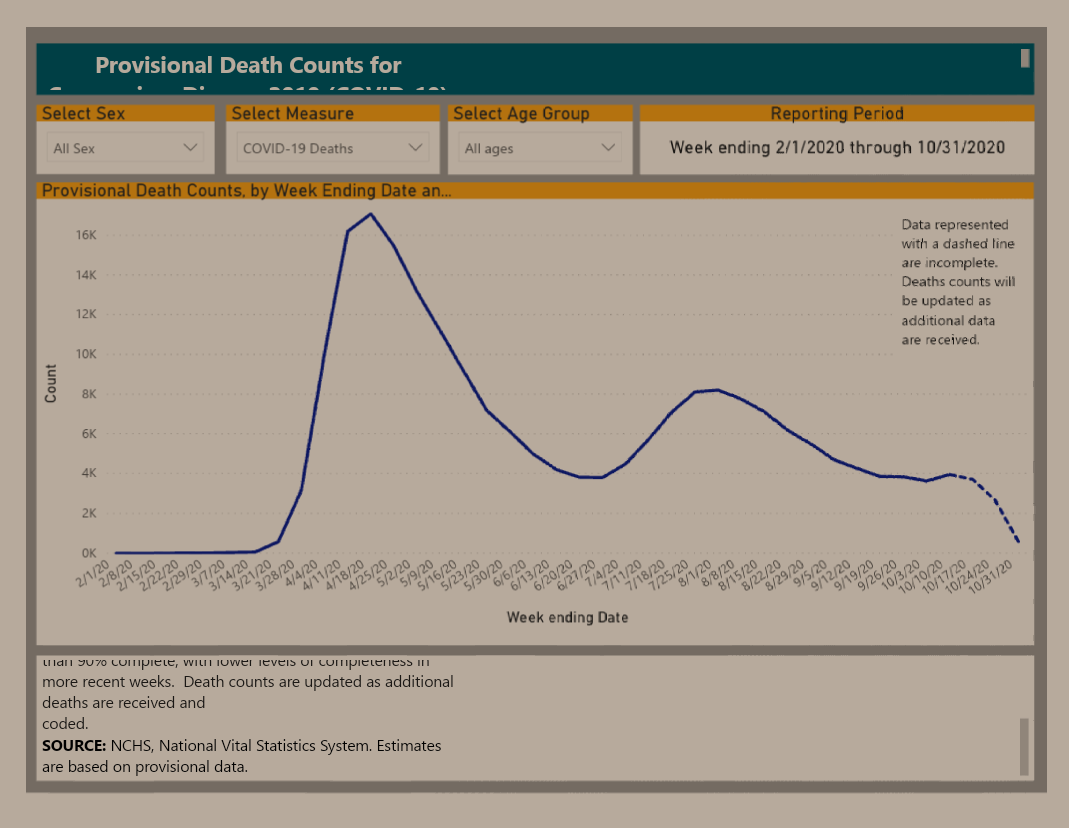 Source: CDC