Recipe: Injera
from Julia Skinner’s ‘Our Fermented Lives’
Injera is a flavorful, slightly spongy flatbread from Ethiopia and Eritrea that is easy to make and a dietary staple in both countries. If you have an existing sourdough starter (or some injera batter from an older batch), you can add some to this batter to speed things up a bit, but you don’t need to.
In Ethiopia, a large, flat skillet called a mitad, usually about a foot in diameter, is used to cook the injera. The mitad is sometimes an electric skillet or simply a flat surface set over a fire, but any large, flat skillet will do.
For a traditional Ethiopian dinner, injera is placed flat on a plate and topped with piles of stews, veggies, and sautéed meat. It can also be torn into pieces and used to scoop up bites of food.
Makes about twenty 6-inch injera
2 cups teff flour
4 cups water, plus more as needed
1/4–1/2 cup sourdough starter or injera batter (optional)
Unrefined salt
Clarified butter or vegetable oil, for cooking
Whisk together the teff flour and water in a large, nonreactive bowl. Then whisk in the sourdough starter or injera batter from your last batch, if using.
Cover the bowl with a clean cloth and set aside out of direct sunlight. Allow to ferment until the batter is bubbly and active and has a sour taste,4 to 5 days if you did not add starter and 2 to 3 days if you did. It will have brown liquid on top—that’s totally normal!
Pour off the top layer of liquid, then add salt to taste. Whisk the batter, then add enough water to give it the thin consistency of crêpe batter.
Heat a large, flat skillet over medium heat. Pour the batter into a large liquid measuring cup.
Coat the surface of the skillet with a tiny bit of clarified butter or oil (quickly wiping the pan with an oiled paper towel or cloth works well). Then pour a thin, even layer of batter into the pan. To make injera properly, you pour the batter in a spiral from the outside inward, with the goal of getting the edges of each ring to touch without overlapping.
Cook for several minutes, until bubbles form on the surface. Then cover the pan with a lid and allow the injera to steam until the edges curl, the top is dry, and the bread releases from the bottom of the pan, 3 to 5 minutes. (Don’t flip your injera.)
When it’s ready, gently remove the injera from the skillet with a thin spatula and transfer to a basket or a plate lined with parchment paper. Repeat the cooking process until you have used up all the batter. Allow each injera to cool for a few minutes before you stack any others on top of it.
Excerpted from Our Fermented Lives © by Julia Skinner.
Category: Recipes I Have Tried
Lower Fat Avobanzo Dip by Mary McDougall
Ingredients
15 Ounce Can Garbanzo beans, rinsed and drained
1 Tbsp Fresh lemon juice
1 Clove Garlic, crushed
1 Onion, chopped
1/2 Small avocado, peeled and chopped (optional)
1 Medium tomato, chopped
4 Scallions, thinly sliced
1 Tbsp Canned, diced green chilies
Directions
Place the garbanzo beans in a food processor or blender. Add the lemon juice and garlic. Process briefly, until the garbanzos are slightly chopped. Add the onion and the avocado, if desired. Process again until the mixture is chunky. Place the mixture in a bowl and add the remaining ingredients. Mix well. Cover and chill before serving.
Forks-Over-Knives chipotle potato rice soup
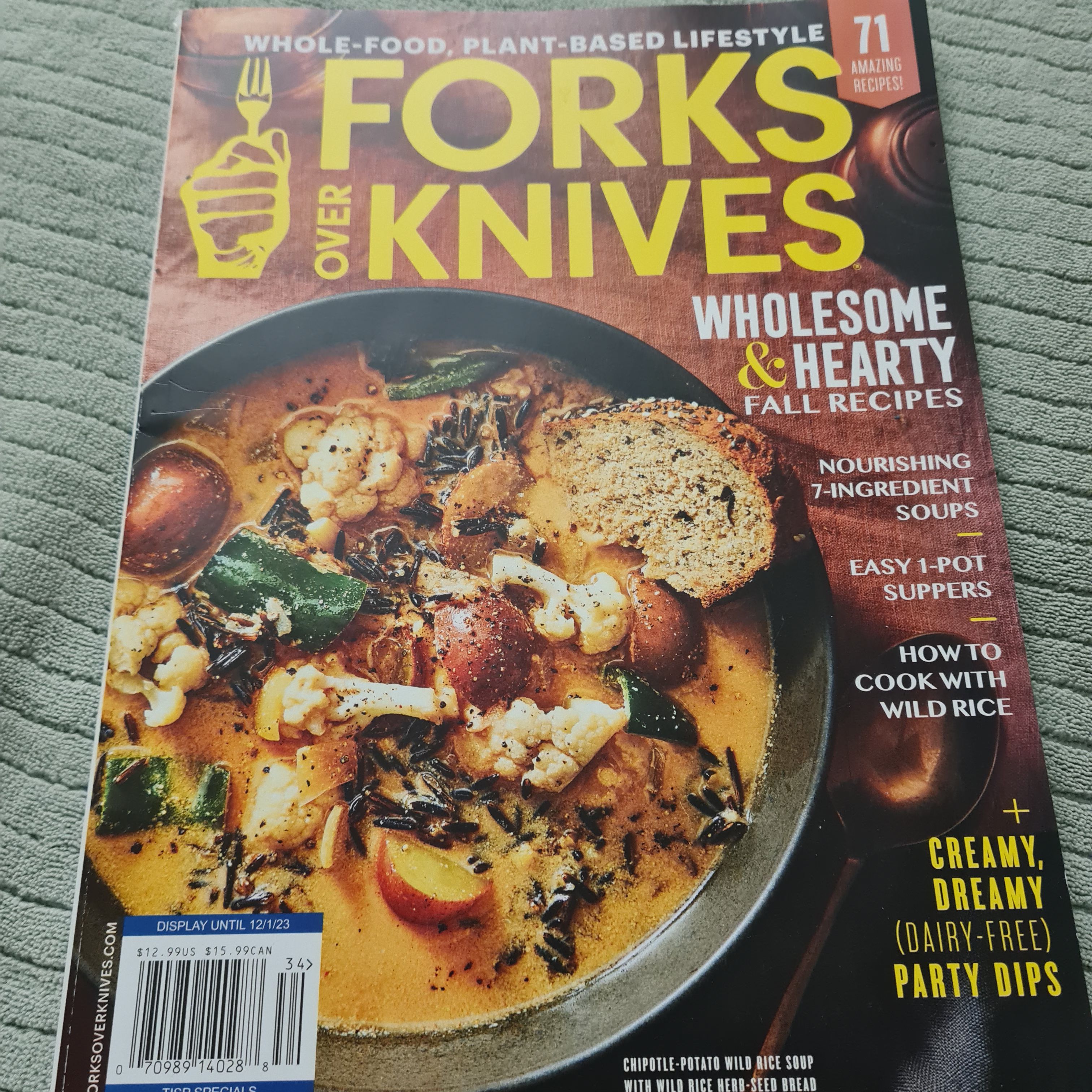
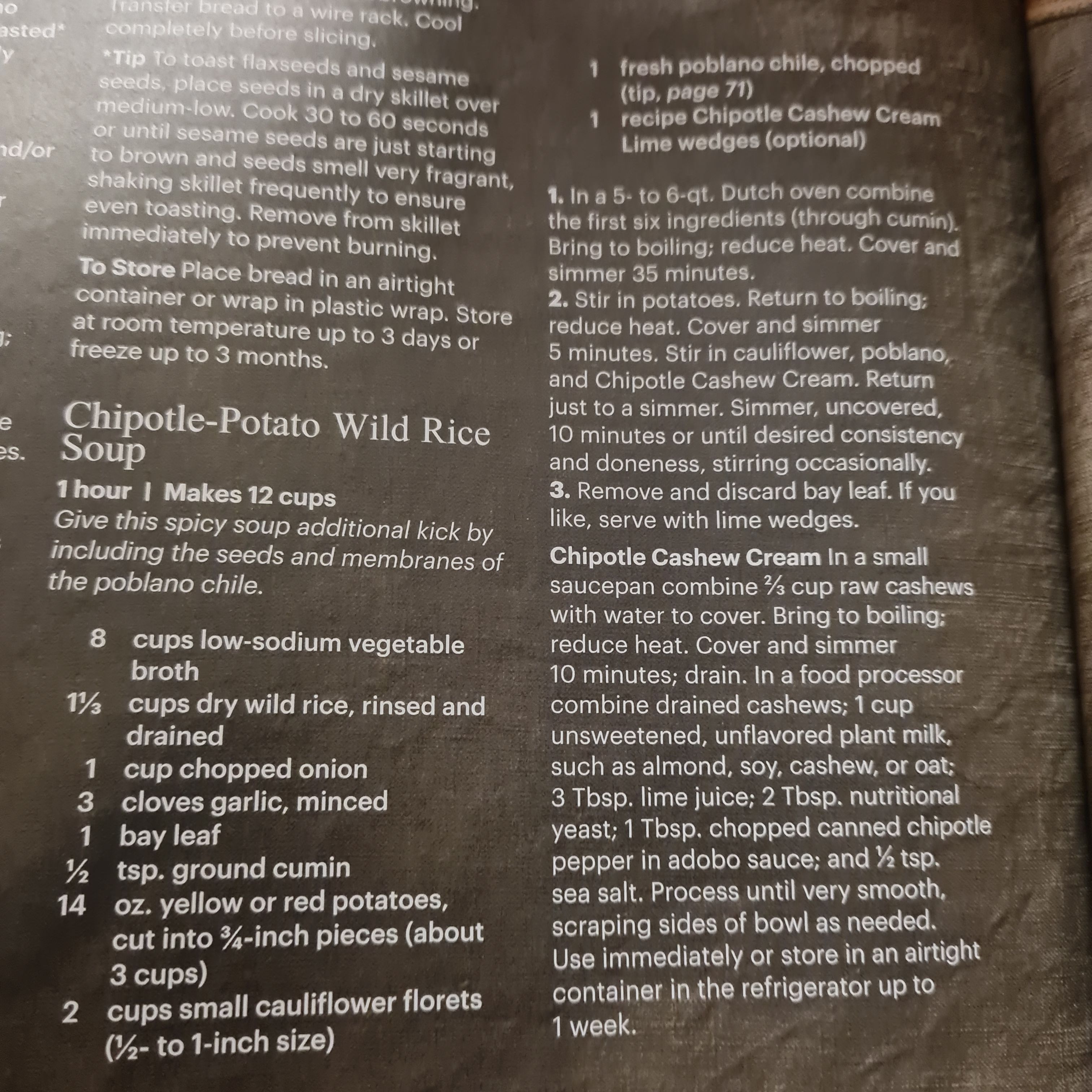
I basically followed their recipe… but no poblano pepper, less chipotle pepper & I made it more soupy (wet). Tasted fantastic!! Only trouble is that it needs greens! I’ll add steamed chopped brussel sprouts to the leftovers mañana.
CHIPOTLE POTATO WILD RICE SOUP
* 8 C low sodium vegetable broth (I use Better Than Bouillon veggie paste in 8 C water, reducing sodium by reducing ratio of bouillon:water)
* 1 1/3 C dry wild rice, rinsed & drained (I often use brown basmati)
* 1 C chopped onion
* 3 cloves garlic, minced
* 1 bay leaf
* 1/2 t ground cumin
* 3 C roughly chopped raw potatoes (red, yellow or any type of white… I’ve even used sweet potato)
* 2 C cauliflower florets
* 1 fresh poblano pepper, chopped (I often exclude pepper, just use more chipotle)
* 1 recipe Chipotle Cashew Cream – recipe below (honestly, I just throw in some Almond Pulp acquired from filtering homemade 1:5 almond milk AND instead of chipotle cream recipe I simply blenderized SMALL amount of chipotle pepper w/ adobo sauce (to taste) from can with almond milk, lemon or lime, nutritional yeast… b/c I found the original amount of peppers too salty & spicy)
*******
CHIPOTLE CASHEW CREAM (original tecipe):
In blender combine
* 2/3 C cashews (may reduce amount, as desired)
* 1 C plant milk (I use homemade 1:5 ratio almond milk)
* 3 T lime juice
* 2 T nutritional yeast
* 1 T canned chipotle pepper in adobo sauce
* 1/2 t salt (optional)
Blend, use immediately, or refrigerate inside airtight container for up to a week.
AMAZING VEGAN MOZZARELLA | EASY & HEALTHY (No Cashews & Oil Free!)
Mozzarella Recipe:
1 box of silken tofu
1/3 cup soy milk
1/2 clove of garlic
1 tsp salt
Juice of 1 lemon
1/2 tsp lactic acid (optional)
1/4 cup nutritional yeast
3 tbsp tapioca starch
*******
For Almond Pulp Version substitute almond milk for the soy milk, and in place of tofu use the pulp collected from filtering your homemade almond milk
*******
For Chickpea Flour Version substitute tofu & soy milk w/
1 C chickpea flour
1 C water, mix well
Add seasoning
Bring a cup of water to boil in a sause pan
Add chickpea mix, stir well to stop it sticking
Once it thickens either use straight away, or pour into a glass dish leave to cool put in the fridge
It becomes solid and you can slice it like cheese
Mary McDougall’s Caesar Dressing
Ingredients
2 Tbsp Almond meal
[Ed: I use 2 T almond pulp leftover from filtering my 1:5 ratio almond milk]
3 Tbsp Dijon mustard
3 Tbsp Nutritional yeast
3 Cloves Garlic, crushed or minced
3 Tbsp Fresh lemon juice
2 Tbsp Regular or reduced-sodium soy sauce
[If too thick add a splash of almond milk]
[Ed: I add some dill flakes and dill seeds and instead of soy sauce I add low sodium vegan worcestershire sauce & a pinch of Kala Namak – Himalayan black mineral salt – has egg flavor]
OIL FREE NO-BAKE VEGAN CHOCOLATE PUDDING PIE
Vegan Oil Free Chocolate Pudding Pie
No Bake *Crust:
1 cup oats
6 medjool date
3/4 cup chickpeas
2 tbsp cocoa powder
1 tsp vanilla
Pinch of salt
1/4 cup plant milk
Filling:
1 packet silken tofu
4 ripe plantain
[Ed: To avoid soy try replacing plantain & tofu with some raw ripe banana & pre-boiled white meat sweet potato mashed together]
1/3 cup cocoa powder
2 tbsp peanut butter powder (optional)
———-
Ed: I found some similar recipe with THIS no bake crust recipe:
3/4 cup oat flour
1 1/2 cups pitted medjool dates, packed
2/3 cup cocoa powder
2 tbsp maple syrup
1 tsp vanilla extract
pinch of salt
Nut Free Vegan Caesar Dressing Recipe – Easy + Delicious
Ingredients:
(Consider doubling this recipe to fit blender)
1/3 C water
2 lemons
2 T aminos
2 T tahini
1 T Dijon mustard
1 T flax oil (or replace w/ some flaxseed mixed w/ lemon juice)
4 T Hemp seeds
3 T nutritional yeast
1 T capers
4 cloves garlic
1/4 t black pepper
1/4 t kelp granules
1/8 t mustard seed powder
1 t coconut sugar
Nut Free Vegan Caesar Dressing
Nut-free Caesar Dressing
½ cup raw sunflower seeds
¼ cup + 3 tablespoons water
2 tbsp lemon juice
2 tbsp nutritional yeast
1/4 tsp dulse flakes
2 cloves garlic
1 pitted medjool date
1/4 tsp pepper
1 tsp salt
1/2 tsp parsley
Combine all ingredients in high-speed blender. Blend until smooth. Add small amounts of water to adjust consistency if necessary.
Enjoy
Easy Olivcado Salad Dressing: Oil-free, Sugar-free
Olive oil=no fiber, minimal nutrients with LOTS of empty calories! Olives blended=fiber, nutrients and moderate calories 😀
1 avocado
1/3 cup water
1/4 cup balsamic vinegar
1/4 cup Kalamata olives
2 dates
1 clove garlic or sub 1 tsp. garlic powder
1 tsp Dijon mustard
1/2 tsp dried Oregano
1/2 tsp salt OR TO YOUR TASTE
Combine all ingredients in high-speed blender. Blend until smooth. Adjust consistency by adding a little water as needed.
Enjoy!
How To Make Easy Healthy Vegan Cheese – Oil-free, Soy-free
INGREDIENTS
STEP 1
½ cup soaked cashews (soaked for a min. of 2 hrs)
1 ¼ cup water
3.5 tbsp arrowroot powder
⅛ tsp garlic
1 tsp salt
2 tsp lemon juice
1 tsp apple cider vinegar
1 tbsp nutritional yeast
STEP 2
1.5 tbsp of agar powder
1 cup water
INSTRUCTIONS
Combine all STEP 1 ingredients in a high-speed blender. Blend until smooth.
Combine STEP 2 ingredients in a saucepan and heat and cook until thick. Add thickened mixture to STEP 1 ingredients and blend until smooth.
Return this mixture to a saucepan and cook until thick. Add to mold or container. Allow to set in the fridge for 3hrs+. Enjoy