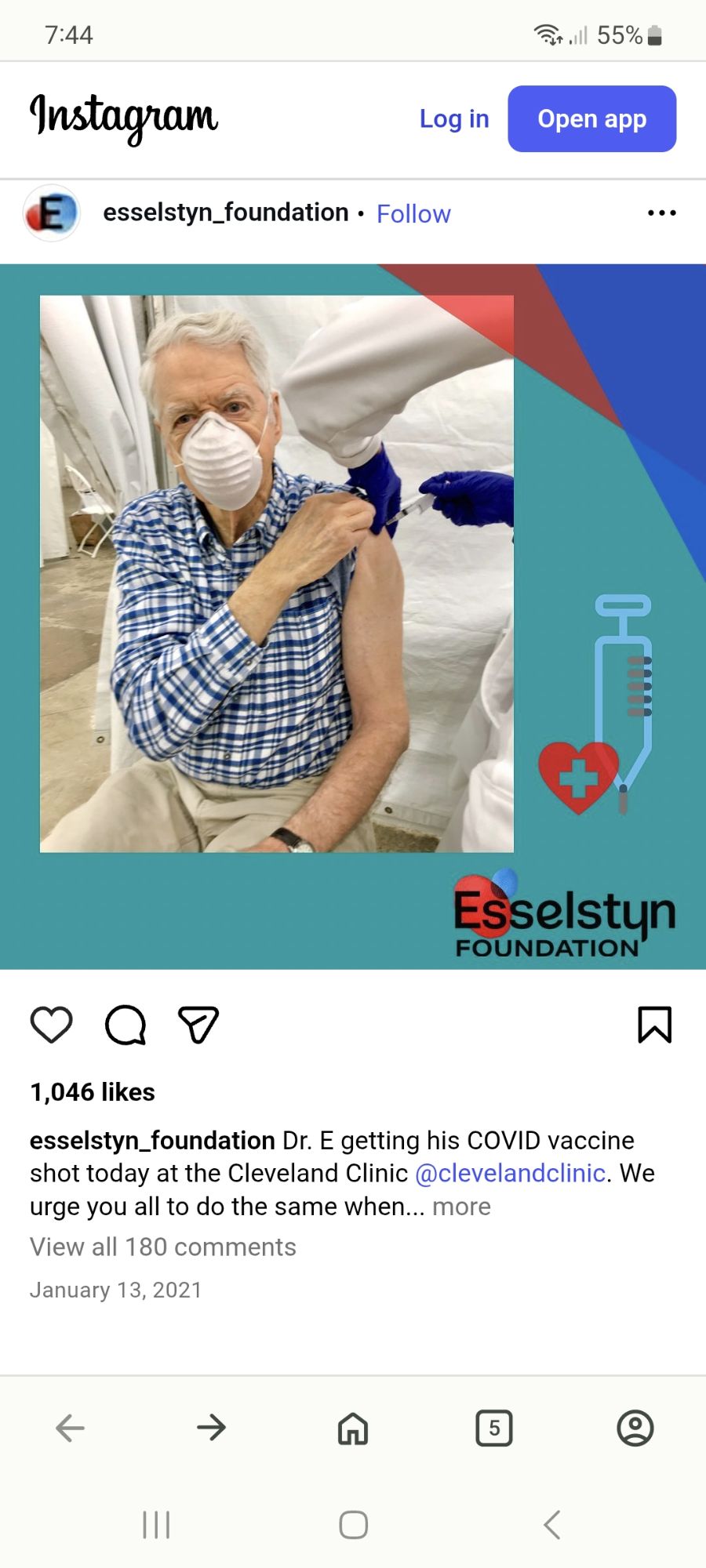
Beneath this outstanding video on YouTube you can scroll down & find a brief conversation between the host Jeff Nelson, and a doctor @GeorgeFett-z5g. It touched me deeply as back then I did recognize the absence of WFPB voices in the early 2020’s advising us on the experimental injection. Besides T. Colin Campbell, PhD and Pam Popper, ND the others were either essentially silent, or taking the injection on camera to persuade us to do the “right thing”. Those were difficult days, we were reduced to personal research & logic to arrive at our own conclusions. Perhaps that was the best thing that could have happen to us! (To thine own self be true.)
@GeorgeFett-z5g Let’s walk down memory lane..which of these “esteemed” physicians-who were alive at the time-publicly warned about the dangers of Covid-19 gene therapy injections..that’s right none, zero, zilch. Who recommended that friends, patients, colleagues receive the injections? That’s right, JohnMcDougall, Michael Greger..at least. Who among these notables, having had the opportunity to review/research what has been revealed as of June, 2026, have come to understand how we were lied to regarding the entirety of lack of scientific basis for any of the draconian laws/restrictions that were imposed? Nope, none other than Pam Popper ND. Yes, I am a physician, yes I am plant based, yes I did a rotation with Dr McDougall during my Internal Medicine residency..and yes I am extremely disappointed and disgusted with the entire lot.
@vegsource I think that’s a fair point. I don’t personally seek advice about that subject from plant based or any other doctors for the most part. There are a number of pb experts I know who absolutely avoided it, but most were not willing to speak publicly. Colin Campbell was an exception and he explained early on why he would be avoiding any of that stuff. And he’s still with us, thankfully.
@GeorgeFett-z5g Greatest respect for Dr Campbell. I had the opportunity to be in Cornell University’s graduate program in Nutritional Biochemistry back in the mid 1970s. At the time, Dr Campbell had yet to make the transition to where he eventually ended up. Had situations been different I would have not resigned from the program, instead it would have been my great fortune to have had him as my mentor and colleague.
Dr. Robert Morse, ND (natural doctor) teaches that most thyroid disorders—including hypothyroidism and Hashimoto’s thyroiditis—are not primarily diseases of the thyroid itself. Instead, he believes they result from a congested lymphatic system, weakened kidneys/adrenals, poor diet, and accumulated “cellular waste.” His approach is known as Regenerative Detoxification. (Holistic Nutrition Academy)
His typical protocol includes:
A fruit-based diet, often emphasizing grapes, citrus, berries, melons, and other water-rich fruits.
Large amounts of raw vegetables and leafy greens, especially green juices.
Avoiding meat, dairy, eggs, processed foods, oils, refined sugar, grains, and most cooked foods during intensive detox periods.
Herbal formulas that he says support the kidneys, adrenal glands, lymphatic system, endocrine glands, and thyroid.
Drinking plenty of water and encouraging bowel regularity.
In some cases, he recommends fruit or grape fasts for days to weeks under guidance. (Holistic Nutrition Academy)
Regarding thyroid disease specifically
Dr. Morse teaches that:
The thyroid often improves when the kidneys, adrenals, and lymphatic system are restored.
Many people can eventually reduce or discontinue thyroid medication after detoxification.
Autoimmune thyroid disease is viewed as reversible through diet and detoxification rather than requiring lifelong treatment. (Facebook)
What does the scientific evidence say?
This is where it’s important to separate Dr. Morse’s philosophy from established medical evidence.
There is good evidence that:
A whole-food, plant-rich diet can reduce inflammation and improve overall health.
Correcting deficiencies (such as iodine, selenium, iron, zinc, or vitamin D when present) can support thyroid function.
Some people with mild thyroid dysfunction improve with treatment of the underlying cause.
However:
There is no high-quality clinical evidence that fruit-based detoxification or lymphatic cleansing reverses autoimmune thyroid disease or reliably restores thyroid function.
There is no accepted scientific evidence that kidney or lymphatic “detox” reverses hypothyroidism.
People with established hypothyroidism, especially from Hashimoto’s, generally require ongoing monitoring, and many need lifelong thyroid hormone replacement.
If you’re considering his program
If you’re taking thyroid medication such as Levothyroxine, it’s important not to stop it on your own. If dietary changes improve your thyroid function, your healthcare clinician can monitor your Thyroid-stimulating hormone and free T4 levels and adjust medication safely if appropriate.
If you’ve been interested in very low-sodium, whole-food plant-based eating, some aspects of Dr. Morse’s recommendations (more fruits, vegetables, and minimizing processed foods) may fit well with your goals, while others—such as prolonged fruit fasts or stopping prescribed thyroid medication—deserve extra caution.
A few years ago, my blood pressure started drifting up. Not dangerously — just enough that I started paying attention.
After a medically supervised water-only fast at TrueNorth Health Center and some changes to how I eat, my numbers came down significantly. They’ve stayed in a healthy range ever since.
In this video, I dig into one of the most overlooked factors in blood pressure: the ratio of potassium to sodium in your diet. It’s not the story most of us were told about salt.
Drawing on the work of Dr. Peter Rogers and Dr. John McDougall, I look at why traditional populations eating whole, plant-based foods have such low rates of hypertension — and what happens to their numbers when they switch to a Western diet.
*******
This video explores how lifestyle and dietary choices can significantly improve blood pressure, moving beyond the common, limited focus on salt intake alone. The host, Jeff Nelson, shares his personal journey of normalizing his blood pressure through a supervised water-only fast and dietary changes.
Key Takeaways:
**The Silent Killer:** High blood pressure (0:28-0:59) is often asymptomatic but can lead to severe long-term damage, including heart attack, stroke, kidney failure, and cognitive decline.
**The Potassium-Sodium Ratio:** The video highlights the “K factor”—the ratio of potassium (K) to sodium (Na) (4:02-4:15). A diet rich in whole plant foods (naturally high in potassium and low in sodium) allows blood vessels to relax, whereas a Western diet (processed foods) leads to constriction (4:31-4:58).
**The Impact of Weight:** Excess body fat, particularly abdominal fat, increases inflammation and forces the heart to work harder, directly elevating blood pressure (5:42-6:07).
**Practical Steps for Health:** * Adopt a diet based on whole plant foods like starches (potatoes, rice, beans), fruits, and vegetables (6:22-6:32). * Reduce highly processed foods and minimize added salt (6:32-6:42). * Prioritize exercise, sleep, and stress management (6:35-6:39). * **Monitor Regularly:** The host recommends home monitoring (1:25-1:41) to keep track of your numbers, noting that even modest lifestyle improvements can yield quick results (6:10-6:13, 7:09-7:12).
**Note:** The host emphasizes that if you are currently taking blood pressure medication, it is critical to **consult your doctor** before making changes, as your pressure may normalize quickly and require medication adjustments (7:04-7:30).