This is a comment I found online. It is an open letter to the Ohio State Health Department.
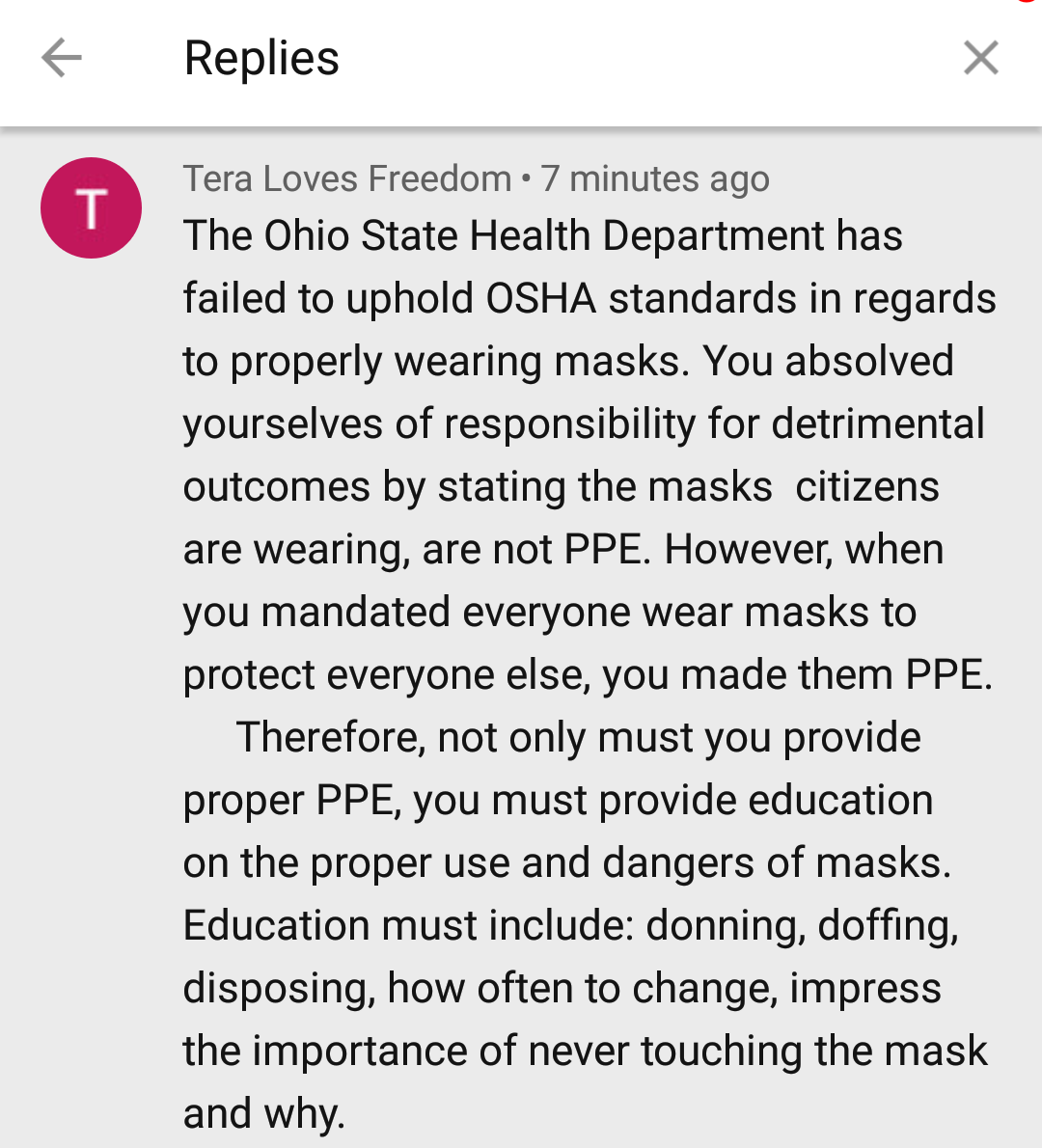

This is a comment I found online. It is an open letter to the Ohio State Health Department.
Eli Lilly reports a 72 percent reduction in hospitalization risk among patients who received its monoclonal antibody compared to those who received a placebo.
The results are in from the first monoclonal antibody drug [a clone that is derived asexually from a single cell] for COVID-19 tested in humans. The small Phase 2 clinical trial involving 452 participants shows the drug can reduce the need for hospitalization in patients with mild-to-moderate COVID-19 symptoms compared to control patients. The drug’s manufacturer, Eli Lilly, released a statement announcing the trial results, and the raw data have not yet been peer-reviewed or published.
Convalescent plasma treatments, which work by giving a patient a myriad of antibodies from recovered COVID-19 patients, have received emergency use authorization from the US government, but their benefits are uncertain. Lilly’s LY-CoV555 is monoclonal and provides a singular, targeted antibody treatment that can be scaled up and provide consistent dosing. The medicine binds to the spike protein on the SARS-CoV-2 virus, preventing it from infecting cells. Other antibodies bind to the virus as well but can’t always block infection.
Excellent info here concerning T-cell immunity to covid-19.
https://news.ki.se/immunity-to-covid-19-is-probably-higher-than-tests-have-shown

New York Times
Sept 29, 2020
After having weathered high death rates when it resisted a lockdown in the spring, Sweden now has one of Europe’s lowest rates of daily new cases. Whether that is an aberration remains to be seen.
[…]
Now, though, the question is whether the country’s current low caseload, compared with sharp increases elsewhere, shows that it has found a sustainable balance, something that all Western countries are seeking eight months into the pandemic — or whether the recent numbers are just a temporary aberration.
https://www.nytimes.com/2020/09/29/world/europe/sweden-coronavirus-strategy.html
With a low cost at home rapid paper strip test we can greatly reduce the spread of covid-19. It is already being manufactured from different sources, but needs Federal recognition. Read NY Times article:
https://www.nytimes.com/2020/07/03/opinion/coronavirus-tests.html
Science
Sept 11, 2000
by Meredith Wadman
Since the pandemic began, dozens of studies have reported that many of the sickest COVID-19 patients have been people with obesity. In recent weeks, that link has come into sharper focus as large new population studies have cemented the association and demonstrated that even people who are merely overweight are at higher risk. For example, in the first metaanalysis of its kind, published on 26 August in Obesity Reviews, an international team of researchers pooled data from scores of peer-reviewed papers capturing 399,000 patients. They found that people with obesity who contracted SARS-CoV-2 were 113% more likely than people of healthy weight to land in the hospital, 74% more likely to be admitted to an ICU, and 48% more likely to die.
[…]People with obesity should take extra care to avoid getting sick, Messaoudi says. “If you are a person with obesity, be extra, extra cautious,” she says. “Wear your mask. Wash your hands. Avoid large gatherings.”
In addition, exercising and, separately, losing even a little weight can improve the metabolic health of a person with obesity, and, in doing so, reduce their chances of developing severe COVID-19 if they become infected, says Stephen O’Rahilly, a physician-scientist who directs the MRC Metabolic Diseases Unit at the University of Cambridge. “If you’re 300 pounds, even losing a modest amount is likely to have a disproportionate benefit on how well you do with coronavirus infection. You don’t have to become a slim Jim to benefit.”
Global virus update.
Highest risk reported in this study was restaurant/bar dining (indoors assumed).
Still too early to celebrate, but Sweden has taken much criticism for no mandatory lockdown (although they confess their huge nursing homes SHOULD have locked down). Their general public only self isolated, by choice. The course of the virus was more natural.
Their vocal supporters (epidemiologists) have been systematically banned from social media. Some believe strict lockdowns will prolong the course of the disease. Of course, this is all yet to be verified. We must wait & see. Patience…
https://www.google.com/amp/s/amp.fresnobee.com/news/article245871815.html?espv=1