Category: Workouts
Vibration Plates: Benefits and Exercises
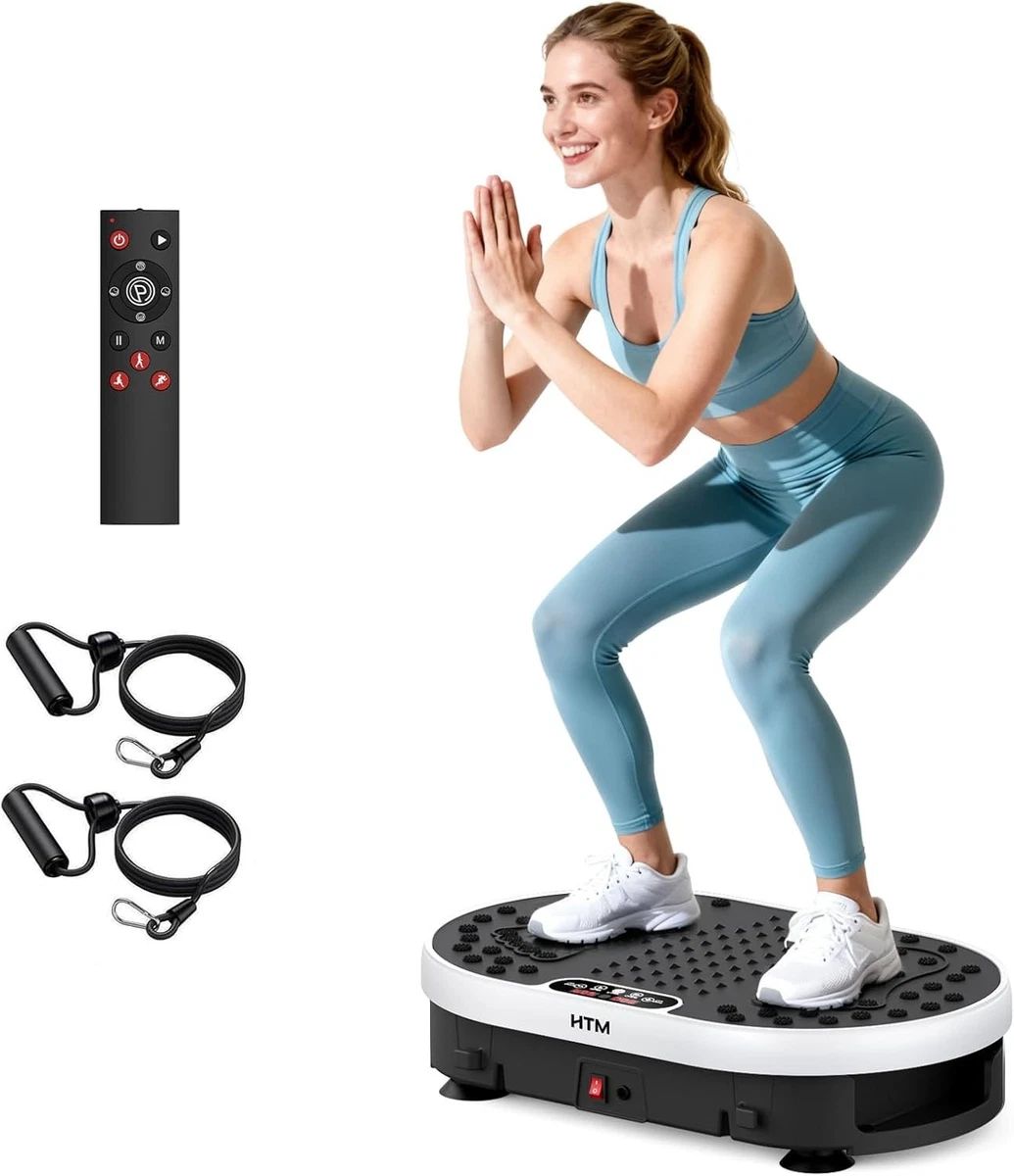
https://www.webmd.com/fitness-exercise/vibration-plates
Mixed reviews on benefits of vibration plate workouts. “They may help improve strength, balance, and bone density, relieve chronic pain, boost brain health, [lymphatic circulation] and contribute to weight loss. That said, more research is needed.” Sessions should be done under the approval of your medical advisor, and only for brief, low intensity settings.
[I find it works great on sore muscles & joints, particularly after other exercise sessions… and my cat loves jumping on between my feet to join the fun!]
https://www.healthline.com/health/vibration-plate-benefits
https://www.mdanderson.org/cancerwise/vibration-plates-are-there-health-benefits.h00-159781179.html
https://pmc.ncbi.nlm.nih.gov/articles/PMC10323263/
Over 65? 5 Must Do Exercises to Replace Walking!
~~~~ Chapters ~~~~
0:00 Video Intro : Walking
0:52 Intro song
1:00 About us
1:11 What to expect
1:50 First exercise – marching
5:05 Second exercise – heel/toes
7:31 External rotation of hips
9:39 low trunk rotation
10:19 Recap w/tips and tricks
11:17 Another video option
11:24 Outro
Billy Blanks Cardio Boot Camp!
Seniors: 4‑minute Exercise to Improve Walking and Balance!
Here’s a **brief and gentle standing video** that works well when you’re assisting a senior and can stand with them.
👉 You can start a timer as you begin the video so you stay on track through each segment.
🕒 4-Minute Step-by-Step Workout
00:00–00:30 — Warm-Up
- March in Place (30 sec)
Warm up your legs and get your blood flowing. Lift knees gently and swing arms in rhythm with your steps.
00:30–01:30 — Balance Exercise #1 (1 min)
- Single-Leg Stance (1 min)
Stand beside a chair or counter for support.- Lift one foot off the ground and balance on the other.
- Hold for 30 seconds, then switch legs for 30 seconds.
Focus on steady breathing and keeping your core engaged.
01:30–02:30 — Walking Balance Drill (1 min)
- Slow March Forward & Back (1 min)
Step forward slowly with one foot, then bring the other to meet it.
Walk forward for 30 seconds, then turn around and walk back the same way.
This improves gait control and coordination.
02:30–03:30 — Balance Exercise #2 (1 min)
- Heel-to-Toe Walk (1 min)
Place heel of one foot directly in front of the toes of the other foot (like walking a tightrope).
Walk forward this way for the full minute.
Use support nearby if needed.
03:30–04:00 — Cool-Down & Stretch (30 sec)
- Gentle Calf Stretch (30 sec)
Stand with feet hip-width apart, step one foot back and press heel down.
Hold for 15 seconds each side.
Slow deep breaths.
Tips for Best Results
- Do this routine daily for consistent improvement. (YouTube)
- Keep a chair or counter nearby for safety and support. (Pinterest)
- Perform movements slowly and with control — quality beats speed.
- If you feel unsteady, lessen the time or stay near a wall or sturdy surface.
Would you like this broken into a printable card or a version tailored to a specific ability level (e.g., beginner, intermediate)?
Tai Chi Walking for Balance
5-Minute Tai Chi Walking Routine for Seniors
**Minute 0:00–1:00 — Centering & Breathing**
1. Stand with feet shoulder-width apart and soften your knees.
2. Relax the shoulders and let the arms hang naturally.
3. Inhale through the nose for 4 counts.
4. Exhale slowly for 6 counts.
5. Continue slow breathing for the full minute, letting the body relax.
**Minute 1:00–2:00 — Opening Step & Preparation**
1. Shift your weight to the right foot.
2. Slowly step the left foot out to the side.
3. Allow both arms to float forward to shoulder height, palms down.
4. Lower the arms gently as you settle your weight evenly.
5. Shift weight side to side a few times to warm the hips and legs.
**Minute 2:00–3:30 — Tai Chi Forward Walking**
1. Shift your weight onto the back (right) leg.
2. Lift the left heel and step forward slowly.
3. Place the heel down first, roll through the foot, and shift weight forward.
4. Let the arms move naturally like slow drifting clouds.
5. Continue forward walking for about 45 seconds.
6. Turn safely, then walk forward again for another 45 seconds.
**Minute 3:30–4:30 — Tai Chi Side Steps**
1. Shift weight to the right leg.
2. Step the left foot out to the side.
3. Bring the right foot in gently to meet it.
4. Continue side stepping for 30 seconds.
5. Reverse direction and repeat on the opposite side for 30 seconds.
**Minute 4:30–5:00 — Closing Movement**
1. Stand with feet shoulder-width apart again.
2. Inhale and raise both arms slowly to chest height.
3. Exhale as the arms float downward, palms facing the ground.
4. Repeat the movement until the minute ends, finishing calm and centered.
5 Minute Senior BALANCE Workout
This video offers **gentle standing movements and balance‑focused exercises** suitable for seniors
https://youtu.be/7j8hDHlaLw4?si=AS1D9IlH_0Nx_cyh
**Minute 0:00–1:00 — Warm‑Up**
1. Stand tall with feet hip‑width apart.
2. Gently march in place, lifting knees slightly.
3. Swing arms gently forward and backward.
**Minute 1:00–2:00 — Side Step Sequence**
1. **Shift weight to your right leg.**
2. Step your **left foot out to the side**.
3. Slowly bring your **right foot in to meet it**.
4. Continue side‑stepping for **30 sec**.
5. Reverse — **shift weight to left leg** and step right for **30 sec**.
**Minute 2:00–3:00 — Side Leg Raises**
1. Stand near a chair or wall for support if needed.
2. Lift your right leg slightly to the side (keep knee soft).
3. Lower gently and repeat for **30 sec**.
4. Switch and raise left leg for **30 sec**.
**Minute 3:00–4:00 — March in Place + Arm Reach**
1. March in place slowly (1:1 pace).
2. Add gentle arm lifts to shoulder height and lower.
3. Keep movements controlled.
**Minute 4:00–4:30 — Heel‑to‑Toe Walk**
1. Stand near support.
2. Place right heel directly in front of left toe.
3. Step forward heel‑to‑toe for **30 sec** (slow, balanced steps). ([Cano Health][2])
**Minute 4:30–5:00 — Closing Movement**
1. Stand with feet shoulder‑width apart.
2. **Inhale** and raise both arms to chest height.
3. **Exhale** as you lower arms slowly, palms toward the ground.
4. Repeat slowly until time ends — focus on calm breathing.
Mommy Butt Hack (stop the kegels)
Over 60? Six Movements Japanese Elders Do Every Day
A concise summary:
6- SLOW WALKING (Sanopi) : Before breakfast, walk while Inhaling for 2 steps, holding for 2 and exhaling for 4. Do it for 20-30 minutes in the morning preferably on natural terrain.
5- DAILY STRETCHING (Rajio Taiso): Upon waking up, do daily stretching to increase synovial fluid production. Start the sequence with gentle arm raises, arm rotation, gentle twisting, side bends, gentle marching in place followed by shallow squat.
4- DEEP SQUATS (Shinku Zuwari): deep squat rest throughout the day for as many minutes as possible while doing whatever.
3- SINGLE LEG STANDING (Ippon Ashi): single leg standing for 1 min twice daily. There is a progression involved.
2- FLOOR SITTING TRANSITION (Seiza Henka): floor sitting transition to standing and vice versa is a full body movement. There are different ways to do it.
1- TOWEL TWIST (Tenugui Hibiki): Done after waking and before bed, the towel twist is another full brain/body workout. Hold a rolled hand towel horizontally at shoulder height. Try to rip it apart while slowly rotating your hips. Inhale during the return to center and exhale during the twist.