Kiki’s Easy Plant Based Mac n Cheese

Ingredients (for “The Yummiest Vegan ‘Cheese’ Sauce Ever!”):

3 cups peeled, diced potato (Yukon Gold works well and may not require peeling) 

½ cup diced carrots 

½ cup raw cashews 

4 tbsp nutritional yeast

1 tsp onion powder 

2 tsp garlic powder 

2 tsp salt 

1¼ tsp lemon juice 

2‑3 cups hot water (reserve the water used to boil the potatoes & carrots) 

Instructions:

Boil the potatoes and carrots together until soft; drain the water and save it for the sauce. 

In a high‑speed blender, combine the potatoes, carrots, cashews, nutritional yeast, onion powder, garlic powder, salt, lemon juice, and about 2 cups of the reserved hot water. Blend until smooth. 

Adjust consistency by adding more of the reserved hot water as needed to thin the sauce.

Notes: For a “white cheese sauce” version, omit the carrots. 


Also: For a fat‑free version, replace cashews with white beans (or omit them) and reduce the water amount.

Tip / Usage ideas:

Use this sauce over pasta, veggies (especially steamed broccoli), as a nacho topping, or in a macaroni‑and‑cheese style dish. (She uses it in her “Broccoli Cheese Casserole” recipe.) 

If you want a spicier variation, see her “Creamy Vegan Poblano Cheese Sauce” version: add a roasted poblano pepper, chipotle powder, etc. 

If avoiding nuts, you can use white beans in place of cashews as she suggests.

  • by Plantiful Kiki

Music & Cognitive Decline

Recent studies increasingly support the idea that engaging in musical activities can have a protective effect on brain health, particularly as we age. Here’s a breakdown of what researchers have found:

🎵 Key Findings:

Cognitive Preservation:

Older adults who regularly play a musical instrument, sing, or even actively listen to music show slower rates of cognitive decline compared to non-musicians.

Activities like reading sheet music, coordinating motor movements, and memorizing melodies engage multiple brain regions, promoting neuroplasticity.

Memory and Executive Function:

Musical training and active engagement with music are linked to better memory, attention, and executive functioning, particularly in aging populations.

Brain Structure and Connectivity:

MRI studies have shown that musicians often have increased gray matter volume in brain regions related to hearing, memory, and motor control.

Lifelong musical activity may also enhance connectivity between brain hemispheres (via the corpus callosum), which can be beneficial as some brain networks degrade with age.

Stress Reduction and Emotional Well-being:

Music lowers cortisol levels, helping manage chronic stress — a known contributor to cognitive decline.

Participating in group musical activities (like choirs or ensembles) enhances social engagement, which is also protective for the brain.

🎹 Not Just for Professionals:

Even late-life musical engagement — such as picking up an instrument after retirement — has been associated with cognitive benefits. It’s never too late to start!

✅ Takeaway:

Incorporating musical activities into daily life, whether by learning an instrument, joining a choir, or simply listening mindfully to music, can be a fun, enriching, and scientifically backed way to support brain health.

*******

✅ Selected Research

Effect of Music Therapy on Cognitive Function Among Older Adults: A Systematic Review and Meta‑Analysis of Randomized Controlled Trials (2025)

Found 33 RCTs (3,058 participants) in older adults; music therapy significantly improved global cognition (SMD = 0.40), memory (SMD = 0.25) and executive function (SMD = 0.37).
PubMed

Strong meta‑analytic evidence for engaging in structured music‑based activities.

The authors note more work is needed to determine “best form and timing” of interventions.

Musical Training and Brain Volume in Older Adults (2021)

Examined older adults and found that higher levels of musical training/engagement correlated with greater volumes in several brain regions (inferior frontal cortex, parahippocampus, etc).
PubMed

Suggests that musical activity is associated not just with cognition but with brain structure preservation.

Musical practice as an enhancer of cognitive function in healthy aging – A systematic review and meta‑analysis (2018)

Included 13 studies of older adults (mean age ~59+) without cognitive impairment. Found benefits of musical practice in domain‑general cognitive functions (e.g., processing speed, inhibition, attention) beyond just auditory/perceptual tasks.
PubMed

Indicates musical practice may bolster cognitive reserve and slow decline.

A Song for the Mind: A Literature Review on Singing and Cognitive Health in Aging Populations (2025)

Focused specifically on singing among older adults, showing improvements in verbal fluency, executive function and episodic memory, plus structural changes (white matter integrity) in older adults engaged in singing.
MDPI

Good reminder that you don’t necessarily need to play an instrument — singing counts too.

The effect of music therapy on cognitive functions in patients with Alzheimer’s disease: a systematic review of randomized controlled trials (2023)

In people already with Alzheimer’s disease, music therapy (especially active music‑making) showed improvements in cognitive functions.
BioMed Central

Suggests musical activity may be beneficial across a spectrum of cognitive ageing — not just “healthy older adults”.

🧠 What These Studies Suggest: Mechanisms & Insights

Multiple brain‑systems engaged: Musical activities combine auditory perception, motor coordination (especially if playing an instrument), memory (learning new pieces), executive control (monitoring and adjusting), emotion/social interaction. This broad engagement may help maintain neural connectivity and efficiency. (See review in the singing paper).
MDPI

Brain‑structure preservation: Studies found correlations between musical training and greater grey‑matter volumes in regions prone to age‑related decline.
PubMed

Cognitive reserve and compensatory mechanisms: One meta‑analysis proposed that musical practice may both train specific functions (e.g., auditory perception) and augment general compensatory mechanisms (e.g., processing speed, inhibition) that help maintain cognition with age.
PubMed

Active vs passive matters: Active music‑making (playing an instrument, singing) often shows stronger effects than just passive listening, though listening still has benefits. For example, the Alzheimer’s review found greater effect when patients actively made music.
BioMed Central
+1

Start later still helps: One study showed healthy retirees (ages ~62–78) with no prior musical training who began piano or music awareness classes for six months improved working memory and had increased grey matter in key regions.
International Council on Active Aging
+1

🎯 Practical Routine: Music‑Based Brain Health Plan

Here’s a sample routine you might adopt (and adjust to your liking):

Weekly plan (example for one person)
Day Activity Notes
Mon 30 min instrument practice (e.g., piano/keyboard/guitar) Choose an instrument you enjoy or have access to
Tue 20 min active listening: pick a piece you’ve never heard, analyze it (rhythm, melody, tempo, instruments) Engagement matters
Wed 30 min singing (alone or with others) — pick songs you love and try learning one new piece each week If instrument isn’t an option
Thu 20 min instrument practice or repeat/strengthen pieces learnt Reinforcement helps
Fri 30 min group music activity or social music (join a choir, jam session, group class) Social interaction adds benefit
Sat 20 min passive listening session: music you love, but focus on mood, emotional response Helps with stress & emotion regulation
Sun Rest/reflect: maybe listen to new genre, or attend a live performance/recording of a new style Variety encourages plasticity
Tips & considerations

Consistency counts more than intensity. Regular, moderate engagement (~20–30 min most days) is good.

Enjoyment matters: choose instruments/genres you like. Motivation improves adherence.

Social & emotional elements boost benefits (e.g., singing in a group).

Novelty helps: learning new pieces or styles invites more brain‑challenge than repeating the same songs.

Start now: It’s never too late. Even older adults with no prior training benefit.

Combine with other healthy habits: good sleep, physical activity, healthy diet all synergize with cognitive health.

Avoid over‑stress: If you’re frustrated or stressed by musical practice, it may reduce the benefit. Keep it fun.

Track progress: Maybe keep a journal of what you do, note how you feel, maybe set small goals (learn 1 new song/month).

Oct 18, 2025 of Low-SOS Vegan Plan

(This blog began 3/15/2015)

MEDITATION:

* Concepts of Faith, Charles Capps episode

* Healing Scriptures on Revelation TV

EXERCISE:
* Jog 5k outdoors
* PT APP workout
–lower body stretch/strengthening

WATER:
(2) × (32) = 64 oz (+)

EATS:
* gfo smoothie w/ lotsa raw kale
* red grapes
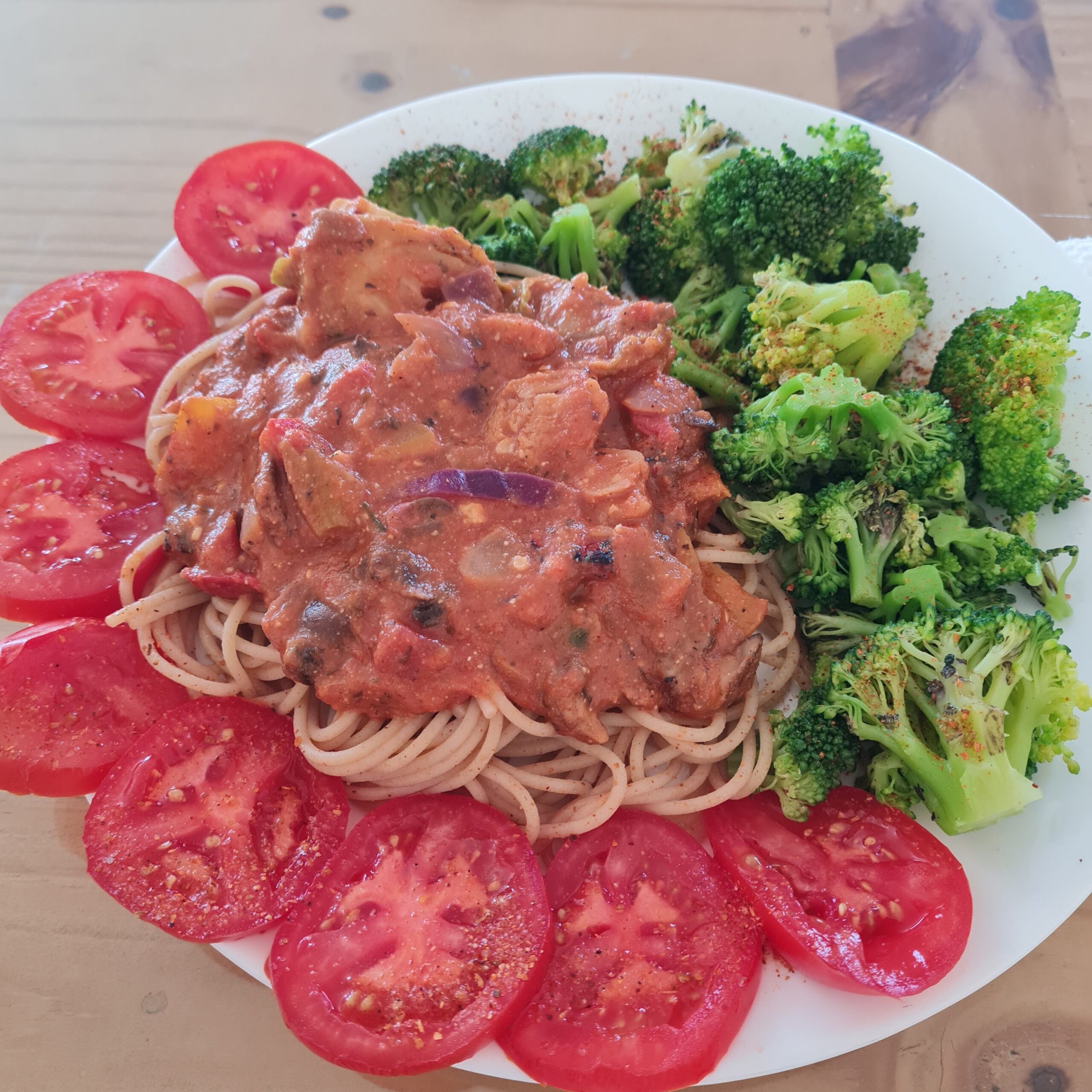
* whole wheat spaghetti w/ fresh tomatoes, steamed broccoli & creamy Italian sauce infused w/ Greger cheesy sauce
* sourdough toast & pistachios

… SUN HAS SET …

Cmmt: XL indicates uncommonly excessive food, and wautéed means water-sautéed

Oct 17, 2025 of Low-SOS Vegan Plan

(This blog began 3/15/2015)

MEDITATION:
* Concepts of Faith, Charles Capps episode

* Nothing But Bible

EXERCISE:
* Powerwalk 4 miles indoors
* Day 3 AI weight training
* PT APP workout
–lower body stretch/strengthening

WATER:
(2) × (32) = 64 oz (+)

EATS:
* pistachios
* gfo smoothie w/ lots of kale
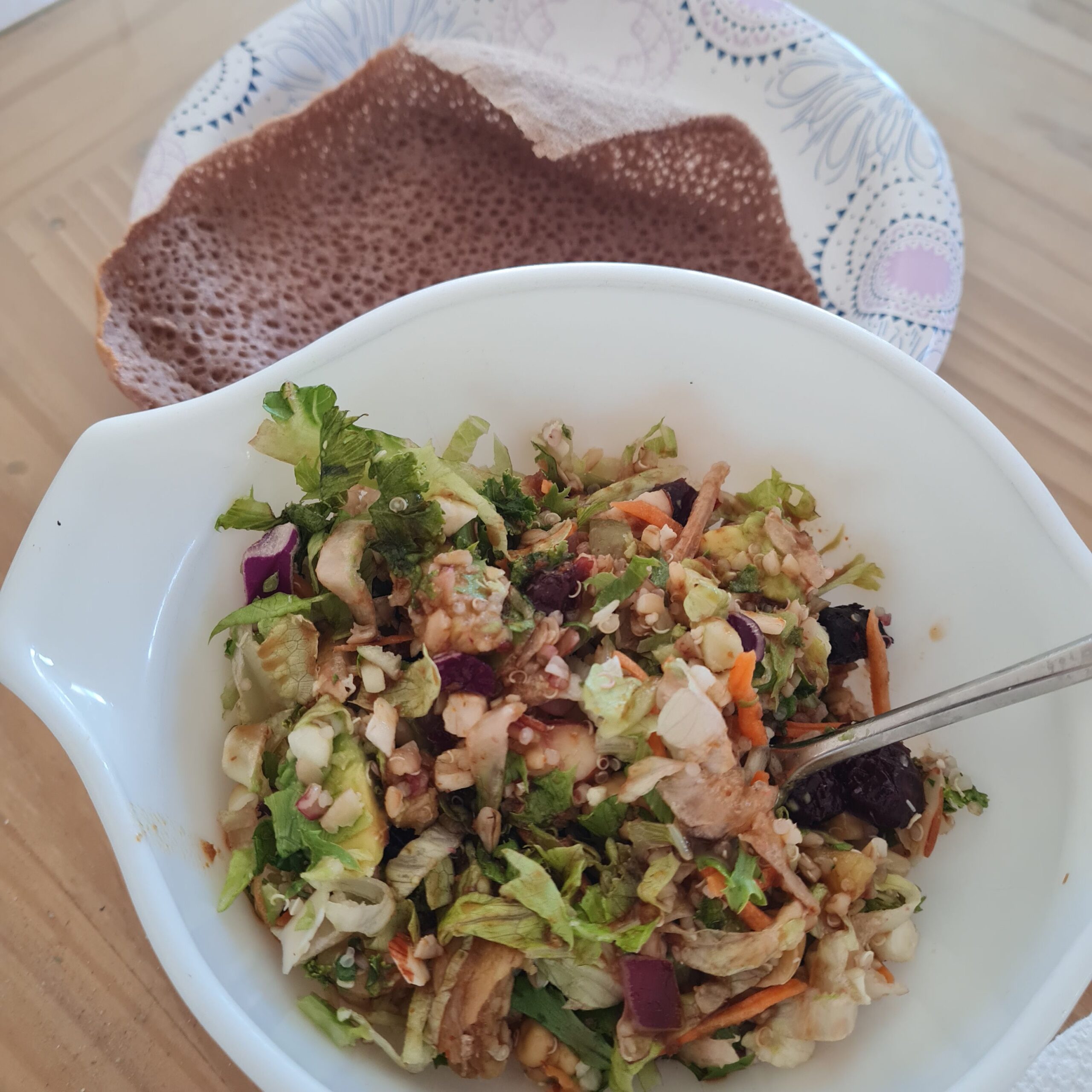
* monster chopped salad (grain & celery salad, organic Mediterranean crunch salad, Japanese sweet potato, tomato  bbq salad dressing, avocado w/ teff injera)
* baked white potato topped w/ black-eyed peas chili, avocado, plain sparkling water w/ shot of soft XL-drink
* plain airpopped popcorn w/ a few popped kernels of XL-sweetened popcorn tossed-in

… SUN HAS SET …

Cmmt: XL indicates uncommonly excessive food, and wautéed means water-sautéed

Whole Wheat Pita Bread – Vegan with Gusto

Homemade whole wheat pita bread is easy to make with just 3 ingredients for oil-free pita pockets, healthier and tastier than store-bought.


Prep Time
20minutes mins
Cook Time
10minutes mins
Resting Time
2hours hrs
Total Time
2hours hrs 30minutes mins


Course: Side DishCuisine: Middle EasternDiet: Vegan Servings: 8 Calories: 156kcal Author: Denise Perrault


Ingredients


1 cup lukewarm water not hot or boiling
2 teaspoons active dry or instant yeast
2 ½ to 3 ½ cups whole wheat flour 282 – 395 grams
1 ½ teaspoon salt


Instructions

1. Add warm water to a small bowl and gently stir in 2 teaspoons of dry yeast over the top. Set aside for 5 minutes until the yeast is fully dissolved and tiny bubbles form on the top. (See notes).


2. Combine 2 ½ cups of flour and 1 ½ teaspoons of salt in a large bowl. For best results, warm the bowl to room temperature.

3. Pour in the yeast mixture and stir with a spoon until the flour is moist. You should have shaggy dough. Mix in a bit of flour if it’s too sticky to handle.

4. Set aside another cup of flour so it’s handy, then turn the dough onto a lightly floured surface and start kneading it. Add flour until you have an elastic dough that doesn’t stick to your hands. Knead for at least 5-7 minutes to release the gluten in the flour.

5. Place a piece of plastic wrap in a clean mixing bowl, then add the dough ball and loosely warp the plastic over the top. You can also add a kitchen towel for extra warmth. Let the dough rise in a warm place until it has almost doubled in size (1-2 hours).

6. Preheat the oven to 450 degrees F (230 C). Turn the dough onto a lightly floured surface and separate it into 8 equal pieces. Roll each into a ball, then let the dough rest for 5-10 minutes.

7. Warm your baking sheet if necessary, and then start rolling. Use a rolling pin to make discs about ¼ inch thick, using your hands to help shape them if necessary. Place each pita bread on a baking sheet, keeping them separated. Bake them in batches, if necessary, but don’t roll until you have a clean baking sheet. Otherwise, the pitas will contract.

8. Bake in the center of the oven for 3-4 minutes. You may see little brown spots start to appear, which is perfectly normal. They should puff up quickly and don’t need to be flipped.

9. If you bake the pitas in batches and wait until the first batch is done before you start rolling again so the pitas will hold their shape.

Notes


Bubbles forming when the yeast is added to warm water indicate the yeast is active. If the yeast doesn’t activate, try again or use a different yeast, as it might be out-of-date or damaged somehow.
The dough needs to be at 70-80 degrees f to rise. If you don’t have a warm space, heat the oven to 70 for a few minutes, turn it off, and let the dough rise in the oven.
Store leftover pitas in airtight bags or containers. To reheat, lightly sprinkle them with water and add them to a slot toaster, hot oven, or toaster oven.
To freeze pitas, separate them with parchment or waxed paper and seal them in an airtight bag. Frozen pitas will keep for about 3 months.
Nutrition
Calories: 156kcal | Carbohydrates: 33g | Protein: 6g | Fat: 1g | Saturated Fat: 0.2g | Polyunsaturated Fat: 1g | Monounsaturated Fat: 0.2g | Sodium: 439mg | Potassium: 171mg | Fiber: 5g | Sugar: 0.2g | Vitamin A: 4IU | Vitamin C: 0.003mg | Calcium: 17mg | Iron: 2mg

https://veganwithgusto.com/wprm_print/whole-wheat-pita-bread