Category: Motivational
Go Vegan Now! – as much as possible
A mostly vegan diet may lower your blood pressure, even if you occasionally eat meat and dairy
Gabby Landsverk
Aug 24, 2020
Insider.com
A vegan diet of plant-based whole foods, with no meat, eggs, or dairy, has been associated with health benefits like lower risk of heart disease.New evidence suggests that a mostly plant-based diet, with small amounts of animal products, can still help to reduce blood pressure and cut risk of cardiovascular illness. Researchers theorize the health benefits of veganism come from eating more vegetables, fruits, whole grains, nuts and seeds, and the wealth of micronutrients contained in these plant foods. Visit Insider’s homepage for more stories.
If you’re intrigued by the health benefits of veganism, but not willing to give up meat and cheese for life, there’s good news.
A mostly plant-based diet may be enough to improve heart health, reduce blood pressure, and lower the risk of heart disease, according to a study published July 24 in the Journal of Hypertension.
Researchers from the University of Warwick reviewed 41 previous studies on a variety of plant-based diets. They found that all the diets surveyed appeared to have health benefits for the participants, even if they still occasionally ate meat and dairy.
A diet rich in plant foods is good for your heart, evidence suggests
The studies included in this systemic review were on seven different styles of plant-based diet: the DASH diet, specifically designed lower blood pressure; a vegetarian diet; a vegan diet; the Nordic diet, rich in veggies and fatty fish; a high fiber diet full of whole grains and legumes; and a high fruits and vegetables diet.
Nearly all of the diets improved blood pressure significantly compared to a diet comprised of what participants in the control group typically ate.
The biggest improvements in blood pressure didn’t come from the vegan diet — they were linked to the DASH diet and lacto-ovo vegetarianism, both of which include eggs and dairy.
This suggests that the benefits of eating plant-based diet are not necessarily dependent on eliminating all animal products.
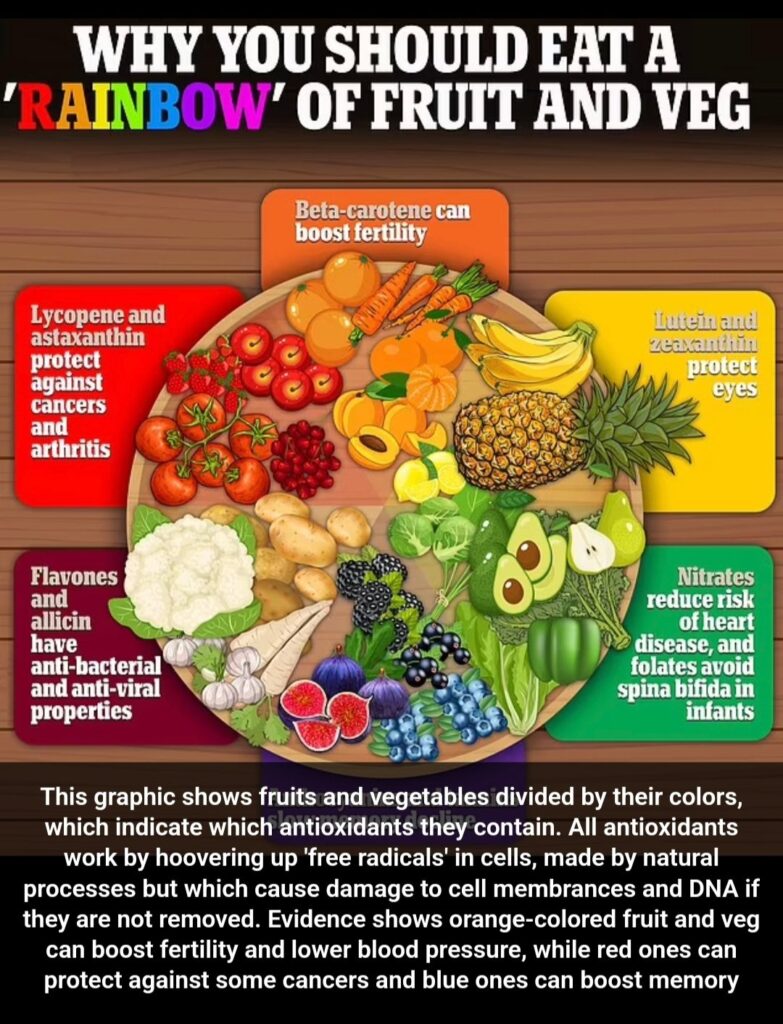
Instead, they are likely linked to eating more plant-based whole foods, which contain flavonoids and nitrates. These could potentially reduce inflammation, improve blood flow, and benefit the gut microbiome, researchers theorize.
A plant-based diet is also likely to be lower in sodium, or salt, than most diets — high sodium is linked to health risks like heart disease.
Although how exactly a plant-rich diet lowers blood pressure isn’t clear, the benefits are promising because evidence suggest that strict vegan diets are harder to stick to over time. A mostly plant-based diet is likely to be more accessible to people who could benefit from including more veggies, fruits, whole grains, and legumes in their diets.
“This is a significant finding as it highlights that complete eradication of animal products is not necessary to produce reductions and improvements in blood pressure,”Joshua Gibbs, lead author of the study and a student at the University of Warwick, said in a statement. “Essentially, any shift towards a plant-based diet is a good one.”
https://www.insider.com/mostly-vegan-diet-lowers-blood-pressure-2020-7
Holistic Holiday at Home (STARTS SUNDAY JULY 26)
Hey, how about taking a free online cruise in your livingroom? Holistic Holiday at Sea is going virtual! (I signed up for the free access pass.)

Watch their pre-pandemic commercial for 2020:
Sign up & join in online!
Now, ya gotta decorate, have some nice tropical food in the fridge, Hawaiian music, orchids and leis. Make it fun for the entire family 😁
July 26 – August 1, 2020, for 7 days of learning, inspiration, and connection, all from the comfort of your own home!
CODE BLUE DOCUMENTARY
Rent/buy film here.
When we embarked on the film project in 2015, the primary initiative was to shed light on the overwhelming body of evidence that supports the importance of diet and lifestyle on the formation of chronic disease. We had no idea its release would be hampered by an acute novel infectious disease. Over the past several months, we have suffered a global period of mourning as our lives have been turned upside down and we have witnessed the loss of so many loved ones. In the midst of this pandemic, Code Blue was released on May 26, 2020, to a community universally in pain. COVID-19 would lead to the cancellation of our theatrical releases in Los Angeles, New York, and Pennsylvania, as well as scratch our plans for a film tour. As an infectious disease specialist who trained in pandemic preparedness, admittedly even I was caught off guard. This virus, for which we still have many unanswered questions, remains elusive and has not only managed to take countless lives but has also irrevocably changed societal norms. The development of a safe and effective vaccine is yet to be realized. Trials for therapeutics are ongoing, some cautiously optimistic, but it will still be some time before they are readily available to the general public. How does the COVID-19 pandemic relate to the chronic disease epidemic and Code Blue? It is, indeed, alarmingly relative. The virus has placed an unexpected and startling spotlight on the chronic disease epidemic. On June 15, the CDC published findings on those affected by COVID-19 in the United States from January to the end of May 2020. Data revealed approximately 1.8 million cases and more than 100,000 deaths during this period. Chillingly, those living with a chronic disease were six times more likely to be hospitalized and twelve times more likely to die. The pandemic has further deeply affected our most vulnerable minority communities, with 33% of cases occurring in Hispanics and 22% in Blacks.
– Dr. Saray Stancic (July 2020)
You may check current CDC covid statistics here.
Poor diets threaten US national security

Living in the midst of a viral pandemic it’s rather startling to realize that poor nutrition is the leading cause of illnesses in the US. The Federal Nutrition Research Advisory Group has published a white paper indicating that unhealthy diets kill more than half a million Americans each year.
Click HERE to read CNN news report.
Click HERE to read the white paper.
The Art of Walking
The Art of Walking (Without Distracting Devices)
Pedestrian: a word fitted to the most drab, tedious, and monotonous moments of life. We don’t want to live pedestrian lives. Yet maybe we should. Many of history’s great thinkers have been pedestrians. Henry David Thoreau and William Wordsworth, Samuel Taylor Coleridge and Walt Whitman, Friedrich Nietzsche and Virginia Woolf, Arthur Rimbaud, Mahatma Gandhi, William James – all were writers who hinged the working of their minds to the steady movement of their feet. They felt the need to get up and get the blood moving, leaving the page to put on a hat and go outside for a stroll. In doing so, they were in step with the antipodal forces of motion and rest, an impetus written into the laws of nature.
How many of us today are able to free ourselves from the page and head out the door when we rise from our desks? Even abiding by the dictates of nature, breathing deeply out in the open air as we set our legs into motion, it’s likely we need to accomplish the undertaking as quickly and efficiently as possible. But in so doing, perhaps we still miss the essence of the activity itself. We forego the art of walking.
‘Walking with a purpose’ is usually regarded as a positive thing, taken as a sign that people are focused, with eyes on an end-goal or prize. But the art of walking is not about purpose or aim. As Immanuel Kant maintained, the creation and apprehension of beauty is embodied in ‘a purposiveness without a definite purpose’. The art of walking is all about this purposeless purpose.
These days, it’s difficult to understand the point of doing something, or doing anything, without an underlying aim. We typically walk in order to get somewhere: the grocery store, the yoga studio, the water cooler. We need to walk the dog, or we walk in protest for a cause. We walk to get in shape, tallying up our steps on a Fitbit or smartwatch. Perambulation becomes a matter of proving, achieving, gaining, winning, meeting a concrete objective. There is something both funny and sad about orienting our walking exclusively around such discrete ends. The frantic attempt to get somewhere, and to be on time about it, amounts to a Sisyphean struggle against the clock: when we reach a destination, we must immediately set off again, intent on the next stopping place. The point of the journey is no more than to ‘get there’. Moving our feet is just the drudgery endured between moments of rest.
Walking is increasingly mediated by technological gadgets worn on wrists or gripped in hands. We spend an increasing amount of time ‘screening’ the world – taking in most of life through a contracted frame that captures objects of immediate interest. To live with eyes on the screen is to be attached, stuck in the frame, taking in what is presented to us and re-presented to us again. But representation – even in fine-grained pixelation – is not experience. To experience is to perceive. When we look at a screen, we might see something, but we don’t perceive. To live life through representations is to live passively, to receive rather than to experience. It is also, we fear, to live the life of a follower. Instead of asking What do I see? How might I tell you? we are told instead how to see, and often what to feel – much of which is determined by algorithm.
The art of walking is antithetical to ‘screening’ the world we live in, and there is no pre-programmed set of rules or calculations involved. Walking, simply for the sake of a walk, can be a brief respite in our otherwise frenetic lives, allowing us to detach so we might see life for ourselves again, not unlike a child does. This, according to Kant, is the freedom of any form of art. But we don’t need to visit a museum in order to be absorbed in artful perception and contemplation. We can just step out the front door, pay attention, and perceive and feel for ourselves.
The discipline of walking as it relates to art should not be mistaken for a leisure activity. Take, for example, walking as a flâneur or as a pilgrim, or going out for a promenade, for in each of these pursuits there are goals: the flâneur sets out into the city streets to investigate or procrastinate; the pilgrim ambles toward the holy land for the sake of a blessing; an evening stroller seeks digestive benefits as well as social interaction, whether walking with a companion or encountering neighbors along the road. In all cases, there are ends to be gained.
Artists allow us to peer into the world through their eyes. Walking as an artist gives us this rare opportunity too. We might be detached while at the same time fully engaged as we move along. The mind is no longer in a state of intention – gathering facts or supplies or blessings, burning calories, being seen – but is instead in a state of attention. The activity becomes a temporary renunciation of purpose and is its own reward, like a form of art: that which Kant referred to as a good in-itself. There is a certain beauty in the awareness of being fully alive while striding through a given space in a given time. This cannot be gotten at through a page or a screen, but only through ears and eyes and nose and skin: the sensation of sky and light, of a building’s grace or immensity, of waves and wind, rocks and leaves, a boundless horizon. When we peer through a screen, we cut off these sensations, limiting too the promenade of thoughts going by – our own insights and visions, not someone else’s.
Walking with disinterest requires a little effort in the beginning, and it comes with practice. Take, for example, a route that we normally walk on our way to work. Our goal is to get there safely and on time, as efficiently as possible, maybe checking email midstride or stuffing earbuds into ears to drown out the traffic or the street life. We move purposefully, with a practical interest in mind. But let’s say, instead, we walk the same path on a day when we don’t need to be at work. We opt to leave the smartphone at home. We decide to slow down and let the mind wander in the open expanse before us. We use the time afoot as Woolf would do, as an opportunity and space in which ‘to spread [the] mind out’.
Still, someone might say, what is the point of simply meandering? This would be like asking what the point of watching a sunset is, or asking the value of gazing at a Rembrandt, or smelling a rose. The answer is simple: for the experience alone. The point is to perceive. Nothing more and nothing less than this. A genuinely aesthetic experience of beauty is aimless. Only when we cultivate an attitude of disinterest are we able to fully apprehend the experience. This might seem confusing, since sunsets and paintings and roses are captivating. But they don’t seize our minds with the iron grip that daily life typically exerts. Watching a golden ball dissolving into the horizon is not going to add to our bank accounts or social status. Our instrumental ends usually force us to see and understand the world in parts, in fragments that fit our particular purposes. In art, we are returned to a more expansive world. Happily, we can travel through this world by walking, with an attitude of detachment, in a state of awareness, attention. We can behold, rather than be held.
When we give ourselves over to the art of walking, we exist in the moment for no reason or purpose other than that of the experience alone, for the appreciation and apprehension of beauty. There is no purpose in this occurrence, only the immeasurable effect it has on our nerves, our body, our being. Woe the society that sees little or no value in this.
This article was originally published at Aeon and has been republished under Creative Commons.
Declining eyesight may be improved by looking at red light, pilot study claims
… Each participant was given a small handheld flashlight that emitted a red light with a wavelength of 670 nanometers. That wavelength is toward the long end of the visible spectrum, and just short of an infrared wavelength, which tends to be invisible to the human eye.
They spent three minutes each day looking into the light over a period of two weeks…
Antiviral Effects of a Plant-Based Lifestyle
Cardiologist Baxter Montgomery interviews nutritional biochemist T Colin Campbell.
Click here for video interview w/ slides:


Could Changing Our Diets Defeat COVID-19?
Center for Nutrition Studies
by T. Colin Campbell, PhD
June 25, 2020
In the early 1980s, I organized and helped lead a comprehensive study of diet, lifestyle, and disease mortality in rural China and eventually Taiwan, to investigate why cancer and other chronic degenerative diseases localized in geographic clusters.
The findings from this study, when combined with experimental studies of cancer in my laboratory and clinical human studies on heart disease, diabetes, chronic kidney disease, and related illnesses by others, showed that a whole-food, plant-based diet could not only prevent but also reverse these diseases.
I draw my confidence in this suggestion both from the multifaceted evidence on hepatitis B virus cited here and from an abundance of evidence showing the comprehensive effect of whole-food, plant-based nutrition on total health. Although some narrowly focused research studies have shown a beneficial effect of plant nutrients on viruses, a protocol using such candidate chemicals or nutrients is not likely to be effective unless they are part of whole food.
This nutritional makeover could be hugely important, both for its health value and because I sense that we are becoming too accepting of our present limited knowledge as to how to manage future flu seasons and other epidemics. I doubt there are many people who will be content with repeated masking, social distancing, and contact tracing when changing our diet could do so much more, while simultaneously protecting social norms, job security, and our economy.
With each new epidemic, do we really want to wait a year or more to develop drug treatments and vaccines of uncertain efficacy?
Treating Erectile Dysfunction with Plants
Urologist Terry Mason from Chicago.