Atrazine is an herbicide used in agriculture. It has a lot of adverse effects on health such as tumors, breast, ovarian, and uterine cancers as well as leukemia and lymphoma. It’s also an endocrine-disrupting chemical, interrupting regular hormone function and causing birth defects, reproductive tumors, and weight loss in amphibians as well as humans (Pathak & Dikshit, 2011. Int J of Ecosys 1:14-23).
I encourage Popular Rationalists to get behind EWG’s petition to stave off the gaggle of politicians working to keep atrazine in our food supply. They are looking for 15,000 signatures – that’s us!
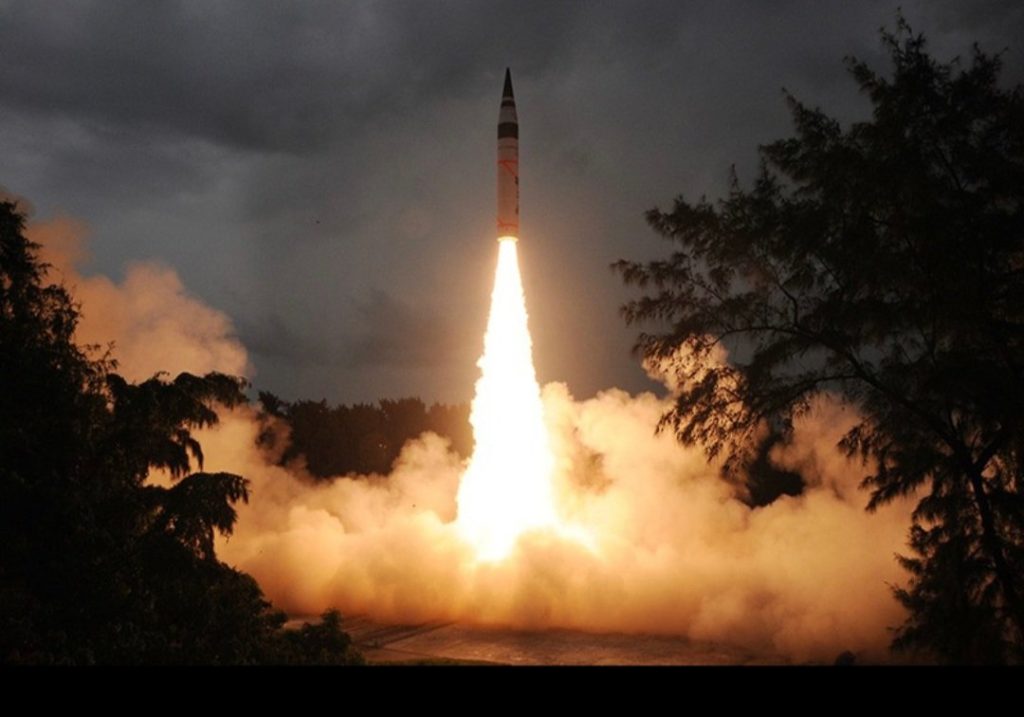
One would hope that such a foolish decision by world leaders would be improbable. After all, even the war hawks realize it could be the end of all for this planet. Surely they are too sensible to set off such a scenario. But are they?
The 2020 model predicts that among many traumatic effects we would all have to endure one of the most troubling would be worldwide famine. The model predicted:
Beyond the oceans, the research team has found big impacts on land crops and food supplies. Jonas Jägermeyr, a food-security researcher at NASA’s Goddard Institute for Space Studies in New York City, used six leading crop models to assess how agriculture would respond to nuclear winter. Even the relatively small India–Pakistan war would have catastrophic effects on the rest of the world, he and his colleagues report this week in the Proceedings of the National Academy of Sciences1. Over the course of five years, maize (corn) production would drop by 13%, wheat production by 11% and soya-bean production by 17% .
The worst impact would come in the mid-latitudes, including breadbasket areas such as the US Midwest and Ukraine. Grain reserves would be gone in a year or two. Most countries would be unable to import food from other regions because they, too, would be experiencing crop failures, Jägermeyr says. It is the most detailed look ever at how the aftermath of a nuclear war would affect food supplies, he says. The researchers did not explicitly calculate how many people would starve, but say that the ensuing famine would be worse than any in documented history.
Farmers might respond by planting maize, wheat and soya beans in parts of the globe likely to be less affected by a nuclear winter, says Deepak Ray, a food-security researcher at the University of Minnesota in St Paul. Such changes might help to buffer the food shock — but only partly. The bottom line remains that a war involving less than 1% of the world’s nuclear arsenal could shatter the planet’s food supplies.
After some speculation on the possible benefits of nuclear conflict they concluded: The cons seem to outweigh the pros in the event of global cooling caused by even a small nuclear war.
It is long past time for promoting peace talks in Eastern Europe.
Agroecology — sustainable farming that works with nature, rather than depleting nature — is the solution to global hunger, poverty and climate change, Vandana Shiva, Ph.D., told Robert F. Kennedy, Jr., on a recent episode of “RFK Jr. The Defender Podcast.”
Is the coverage of populist movements, like the uprising in Sri Lanka, smeared to appease a globalist agenda? That’s too much of a conspiracy theory, isn’t it!? I spoke with the journalist and former co-host of The Hills Kim Iversen about how some global agencies (WEF) seem to have an influence on the way that nations devise policy, for example, the font of the changes around fertilizer that would bankrupt farmers.
Jeremy Loffredo joins Sheila Gunn Reid to provide an update on the fight one Amish farmer from Pennsylvania has with the U.S. government for the right to sell his all-natural produce to whomever he wishes.
California leads the world in production of processing tomatoes — the variety that gets canned and used in commercial kitchens to make some of the most popular foods. The problem is the worst drought in 1,200 years is forcing farmers to grapple with a water crisis that’s undermining the crop, threatening to further push up prices from salsa to spaghetti sauce.
“We desperately need rain,” Mike Montna, head of the California Tomato Growers Association, said in an interview. “We are getting to a point where we don’t have inventory left to keep fulfilling the market demand.”
I used to be somewhat skeptical on the importance of eating organic foods. Then in 2018, an important paper in JAMA came out. That study showed that eating a higher proportion of organic food is inversely associated with the overall risk of cancer (P for trend = .001). Inversely associated in this case means that the more organic foods in the diet, the less cancer.
3:46 Basic rule of thumb for soaking and sprouting seeds / what to do with smaller seeds versus larger seeds / how much to use inside of a 32 oz jar / which seeds grow faster
5:02 Soaking seeds / nuts / rice / beans on the first day with structured water
Amos Miller, an Amish farmer who runs a holistically managed small farm in Bird-In-Hand, Pennsylvania, grows and prepares food in tune with nature, the way he believes God intended. This seems like a sound idea to the approximately 4,000 customers who purchase Miller’s meat, eggs and dairy products from his private, members-only food club.
The federal government, however, appears to disagree. A federal judge recently ordered Miller to cease and desist all meat sales, Our Organic Wellness reported. U.S. marshals were deployed to search Miller’s property. They inventoried his stock to assure he doesn’t sell or slaughter more animals. In other words, the feds shut Amos Miller down.
Miller claims he is being persecuted by the federal government for practicing his religious freedom to grow and prepare food according to his religious beliefs.